Rectangle body shape outfits are often presented as a project in manufacturing curves. That is a very narrow use for clothes. A straighter shoulder-to-waist-to-hip line can support sharp tailoring, loose layers, athletic pieces, slip dresses, and plenty of other looks. The useful decision is whether you want definition today, where you want it, and whether the garment has the fit to make that choice feel easy.
Notice your proportions before buying a solution
A rectangle or straight body shape usually means the shoulders, waist, and hips read as relatively similar in width. It does not mean the waist is absent, and it does not describe bust, backside, height, or muscle. A person with a straight frame may prefer a cropped jacket because it meets the waist neatly; another may prefer a long coat because the uninterrupted line feels stronger.
Decide whether you want waist definition at all
Instead of measuring yourself against a diagram, look at garment landmarks. Where does a waistband land? Where does a jacket end? Do shoulder seams sit in the right place? These points determine whether an outfit feels intentional. A well-fitting plain shirt and straight trousers can be more compelling than a complicated dress that is trying too hard to create a prescribed outline.
Compare dresses, trousers, and jackets by their construction
A belt, waist seam, wrap, tie, or cropped layer can suggest definition, but none has to be tight. Test a belt over a dress while seated. If you need to loosen it immediately, it is decoration rather than a useful piece. A softly tied shirt or a jacket with a little shape at the side seam often provides a similar visual break with much more comfort.
Definition can also come from contrast. A tucked knit with high-rise trousers, a shorter cardigan over a longer tank, or a change in texture at the waist creates a transition without squeezing the midsection. This is particularly helpful on days when you want an outfit to feel structured but do not want to wear a literal belt. The visual effect should be optional; movement should not be.
| Styling tool | What it changes | Practical check |
|---|---|---|
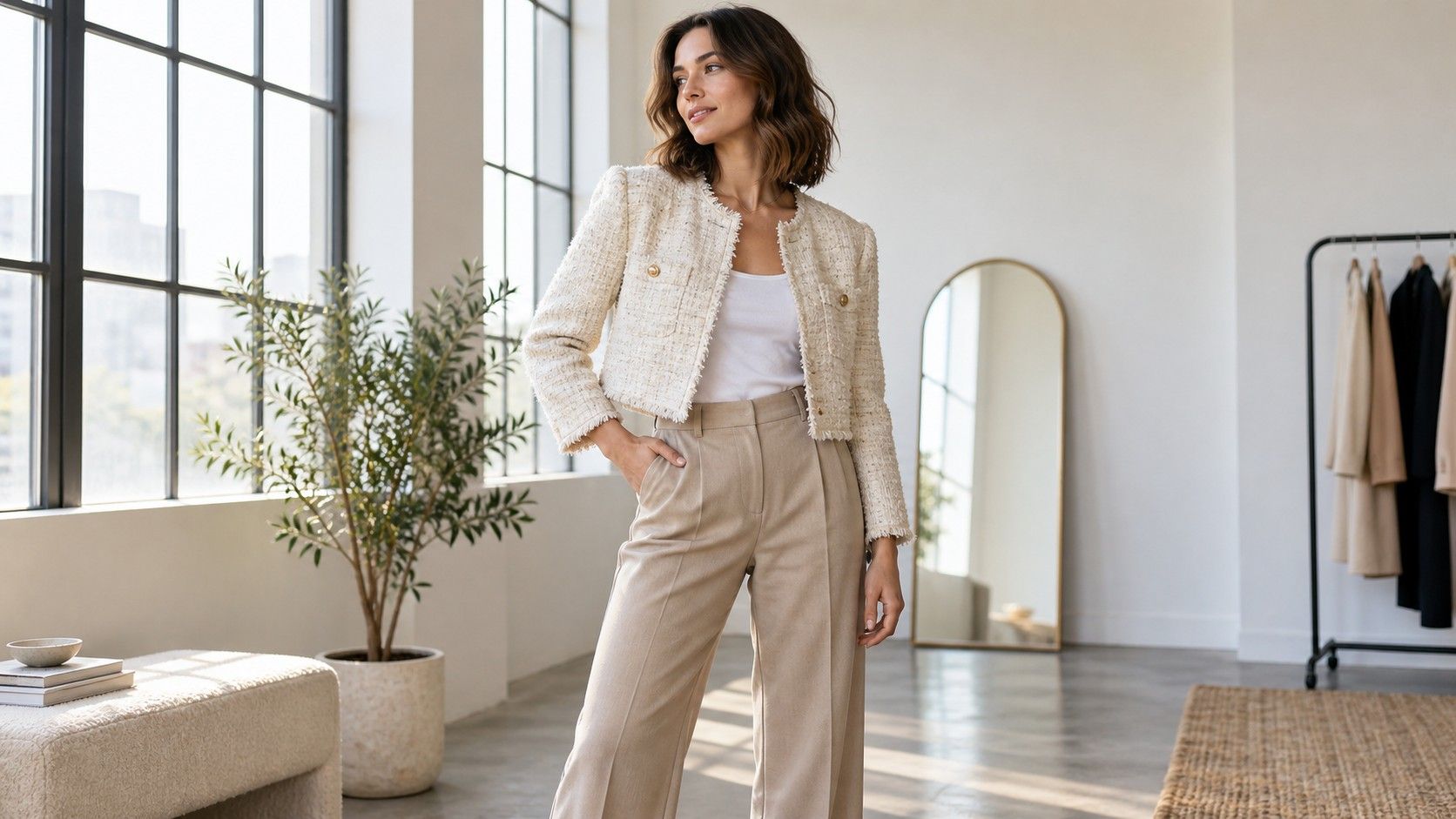
| Cropped layer | Marks a shorter torso length | Lift your arms and check the hem |
| Belt | Adds a waist transition | Sit down without needing to loosen it |
| Texture contrast | Creates depth without bulk | Check it in daylight, not only indoors |
| Waist seam | Sets a fixed focal point | Make sure it lands where you want it |
Use texture and layers with a clear purpose
Texture is one of the easiest ways to add interest to a straight body shape without changing the silhouette. Denim with a fine knit, a ribbed top under a smooth blazer, or a crisp shirt with a soft skirt gives an outfit dimension. The fabrics do not need to be loud. A small difference in sheen or weight is often enough to make a simple combination feel considered.
Layers work best when their lengths are deliberate. A long cardigan over a long tunic can feel heavy if both hems end in the same place, whereas a shorter layer or a visible column underneath gives the eye a clearer path. Try layers from the side as well as the front. Bulky pockets, thick seams, and stiff fabric can create volume where you did not intend it, even in an otherwise good outfit.
For dresses, a shift, shirt dress, slip, fit-and-flare, or column can all suit a rectangle shape. The key is what you want from the garment. A column dress makes a clean vertical line. A waist-seamed dress adds a change of direction. A shirt dress can move between the two depending on whether it is buttoned, belted, or worn open over trousers.
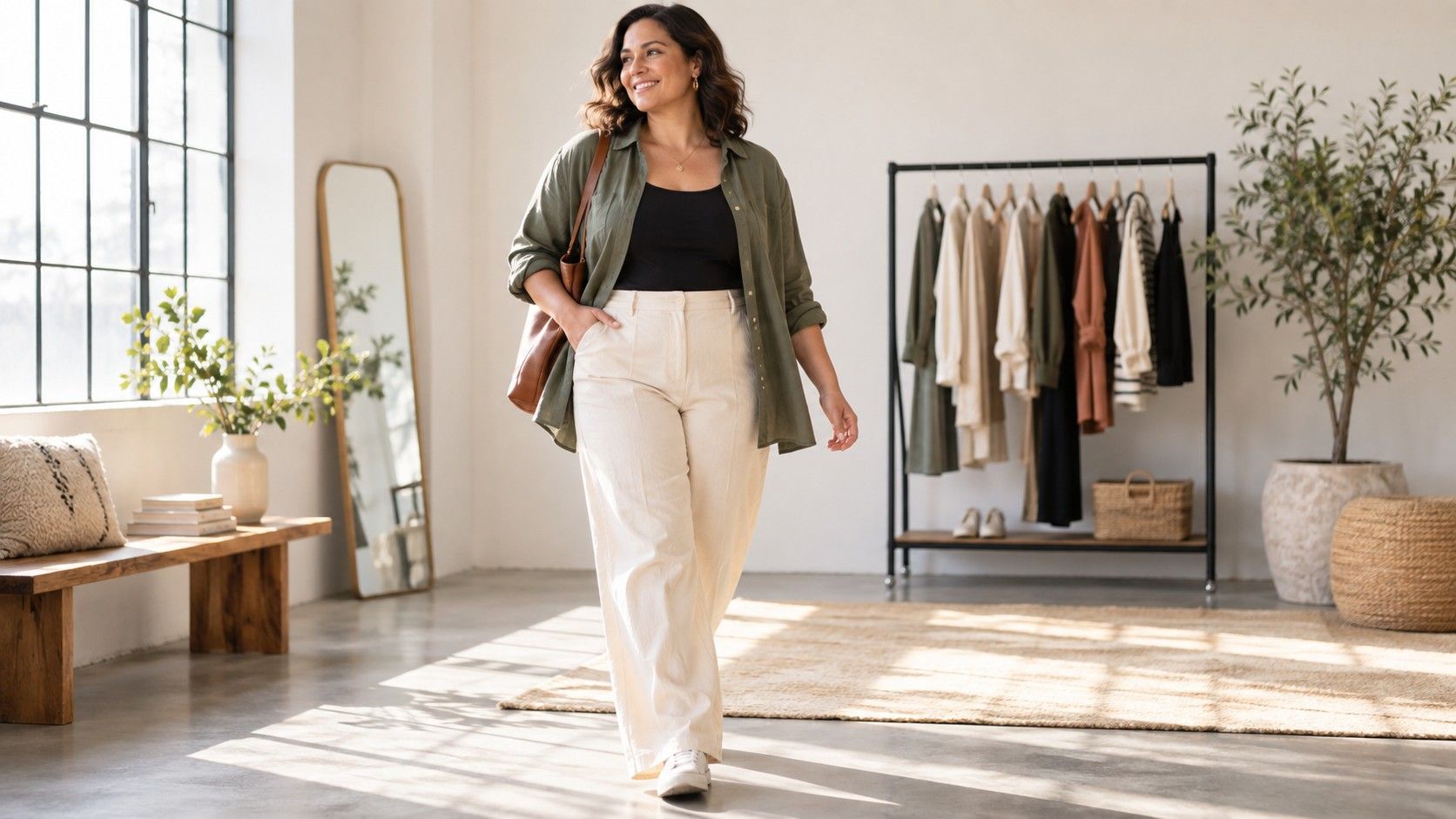
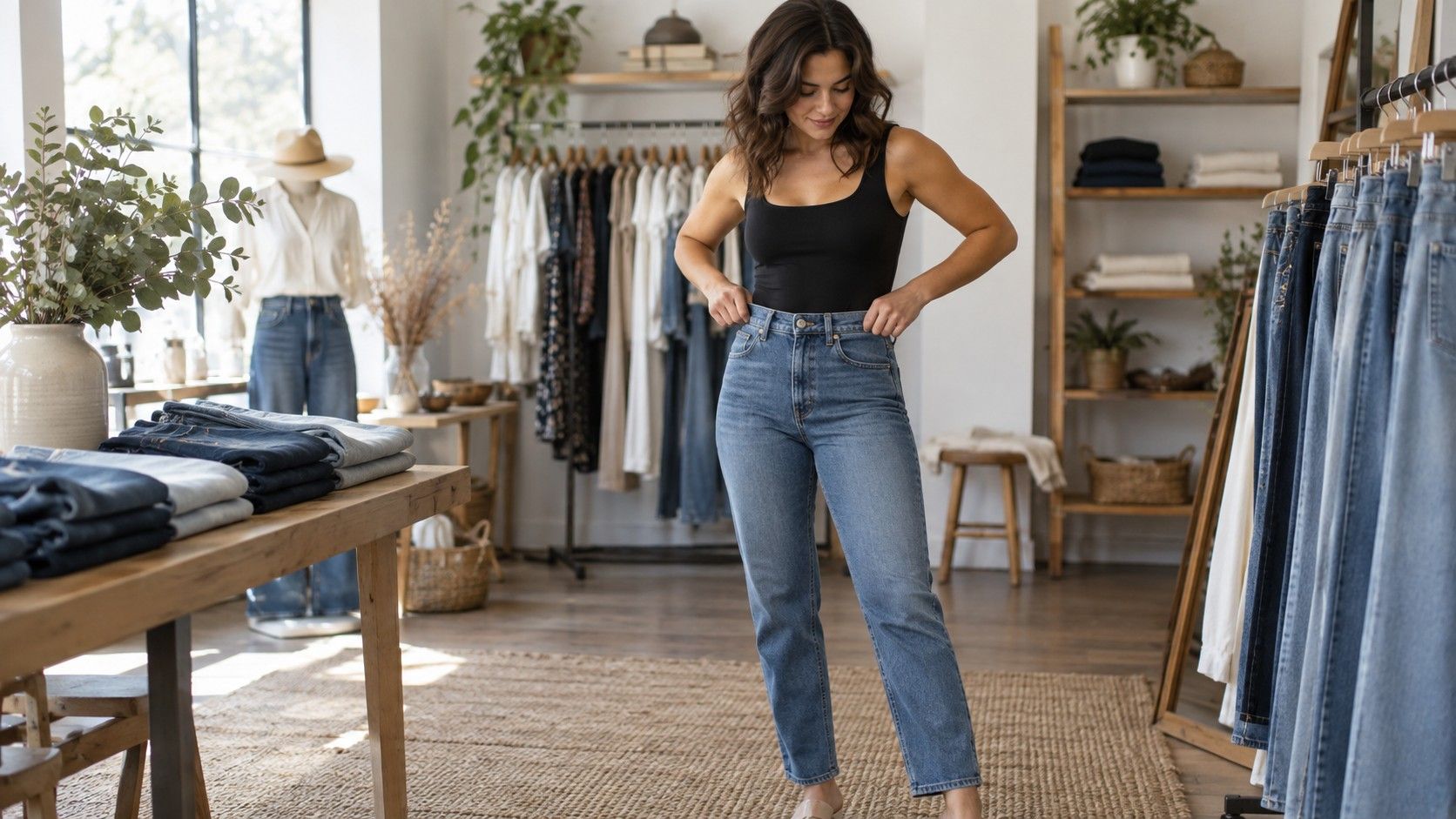
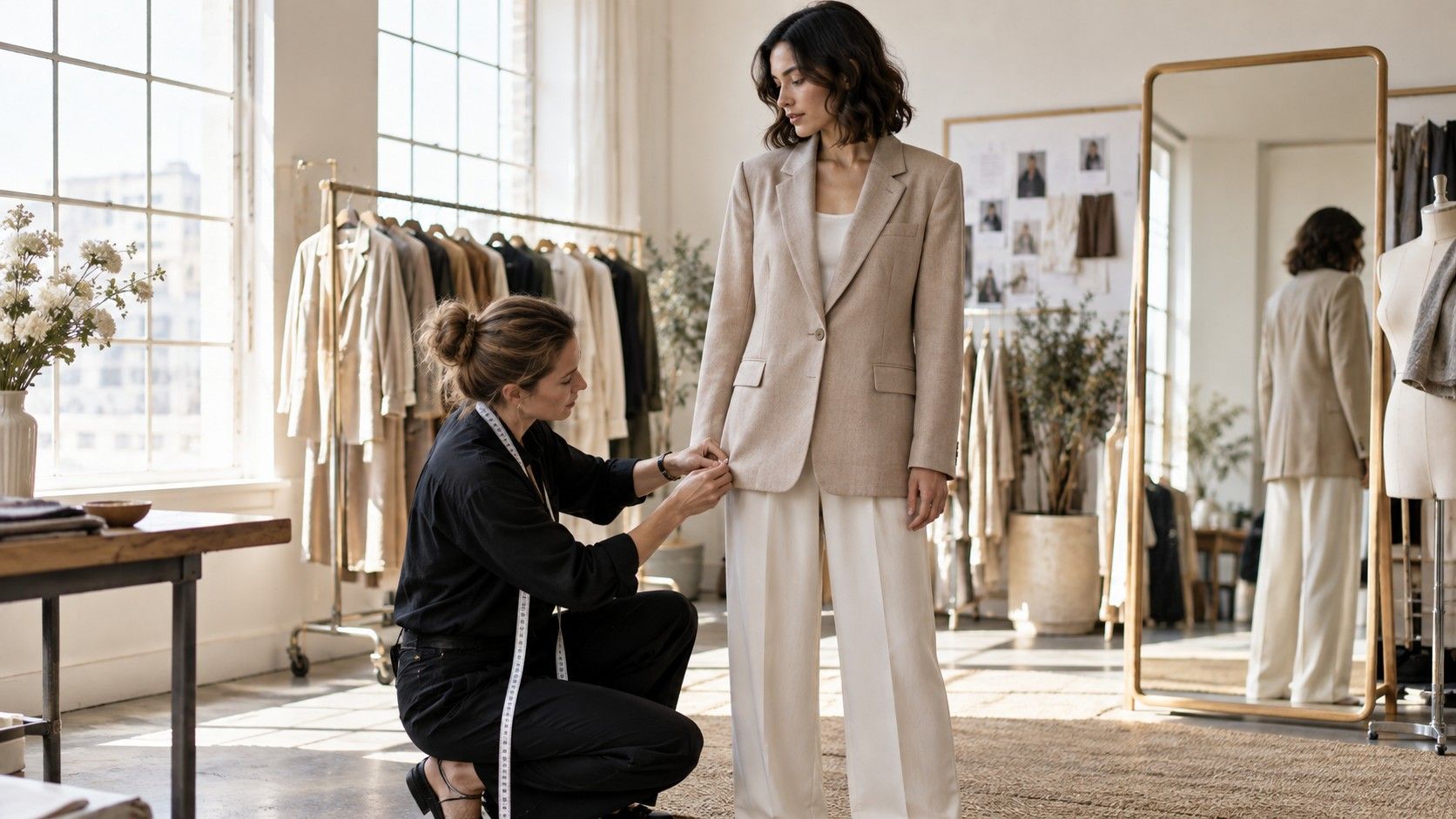
Trousers offer similar range. Straight-leg jeans reinforce a long line, pleated trousers add room and texture, and wide-leg styles can make a short top feel crisp. Jackets should fit at the shoulder before any waist shaping is considered. A boxy blazer can look excellent when its sleeve length and hem are right; a fitted blazer should close comfortably without pulling across the back.
Test length and volume in the outfits you actually wear
Length is often the deciding detail in rectangle body shape outfits. A cropped sweater can make high-rise trousers feel balanced, but it may leave a gap in cold weather; a longer shirt can create an easy column, but only if its hem does not end at the same point as a jacket. Try the piece with the shoes, bag, and outer layer you normally use. One isolated mirror view rarely tells the whole story.
Volume can be placed anywhere. A roomy trouser with a fitted tank, an oversized shirt with a narrow skirt, or a soft dress under a structured coat all create different rhythms. The practical limit is mobility: check that sleeves do not catch under outerwear and that a full skirt still works with a bicycle, stairs, or the chair at your desk. Style becomes more interesting when it has to work in the real world.
Keep a few dependable proportions in mind when trying a trend. If a new top is voluminous, test it with your straight-leg jeans as well as the display trousers. If a wide leg feels good, compare it with a short and a long layer. This makes the purchase part of an existing wardrobe rather than a single impressive fitting-room moment.
Avoid turning personal style into a formula
There is no need to distribute volume evenly between upper and lower body. Some people like a statement sleeve with slim jeans; others prefer a full skirt and a quiet tank. A rectangle body shape is not a problem to solve, and outfit ideas should expand choices rather than shrink them. Repeat the proportions that make you feel capable, whether they are curved, straight, oversized, or minimal.
When something feels unfinished, change one variable at a time: sleeve length, hem length, shoes, texture, or tuck. This is more revealing than adding three accessories at once. Over a few weeks, you will see which lengths make your wardrobe easier to combine. That personal evidence is more valuable than any fixed rule about a straight body shape.