Clothes can be the right size and still feel slightly off. Often the missing piece is proportion: where a hem ends, where a waistband sits, how much visual space a jacket leaves above and below it. This body proportions guide is about noticing those details without turning your reflection into a geometry problem.
Shape and proportion solve different questions
Body shape describes the broad relationship between shoulders, waist, and hips. Proportion asks how the parts relate vertically and horizontally: torso to legs, shoulder width to garment width, waist placement to skirt length. One person can have a familiar shape label and several distinct proportion concerns.
Notice your vertical proportions first
For example, two people may both have similarly defined waists. One prefers a longer blazer because their torso reads long; the other finds that same blazer overwhelms the leg line. The category has not failed. It was simply too broad to choose a hem length on its own.
Use garment lengths deliberately
Start with a known outfit rather than an idealized diagram. Choose something you wear often, photograph it from the front at chest height, and ask where the outfit visually divides. You are looking for clues, not faults to correct.
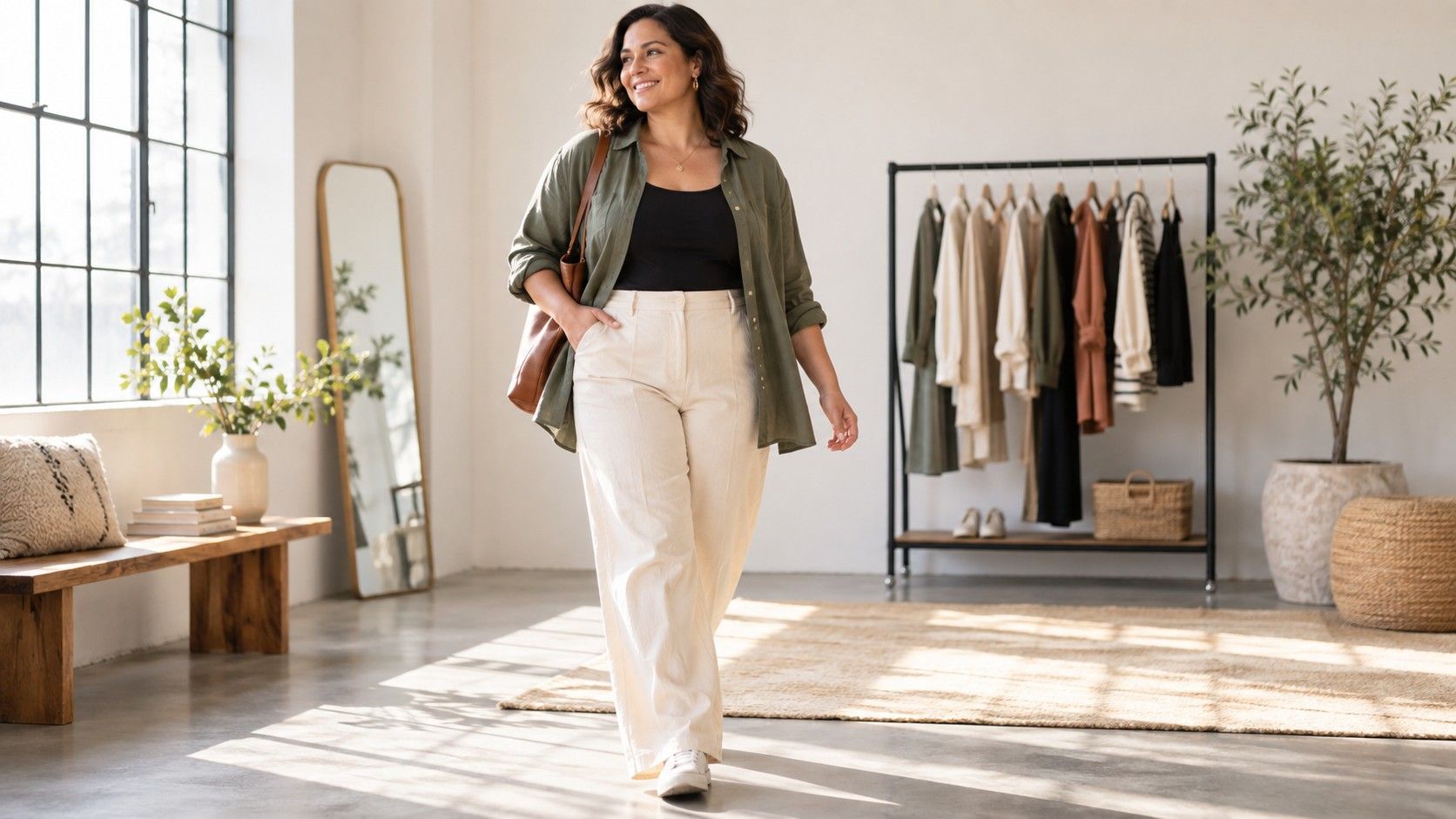
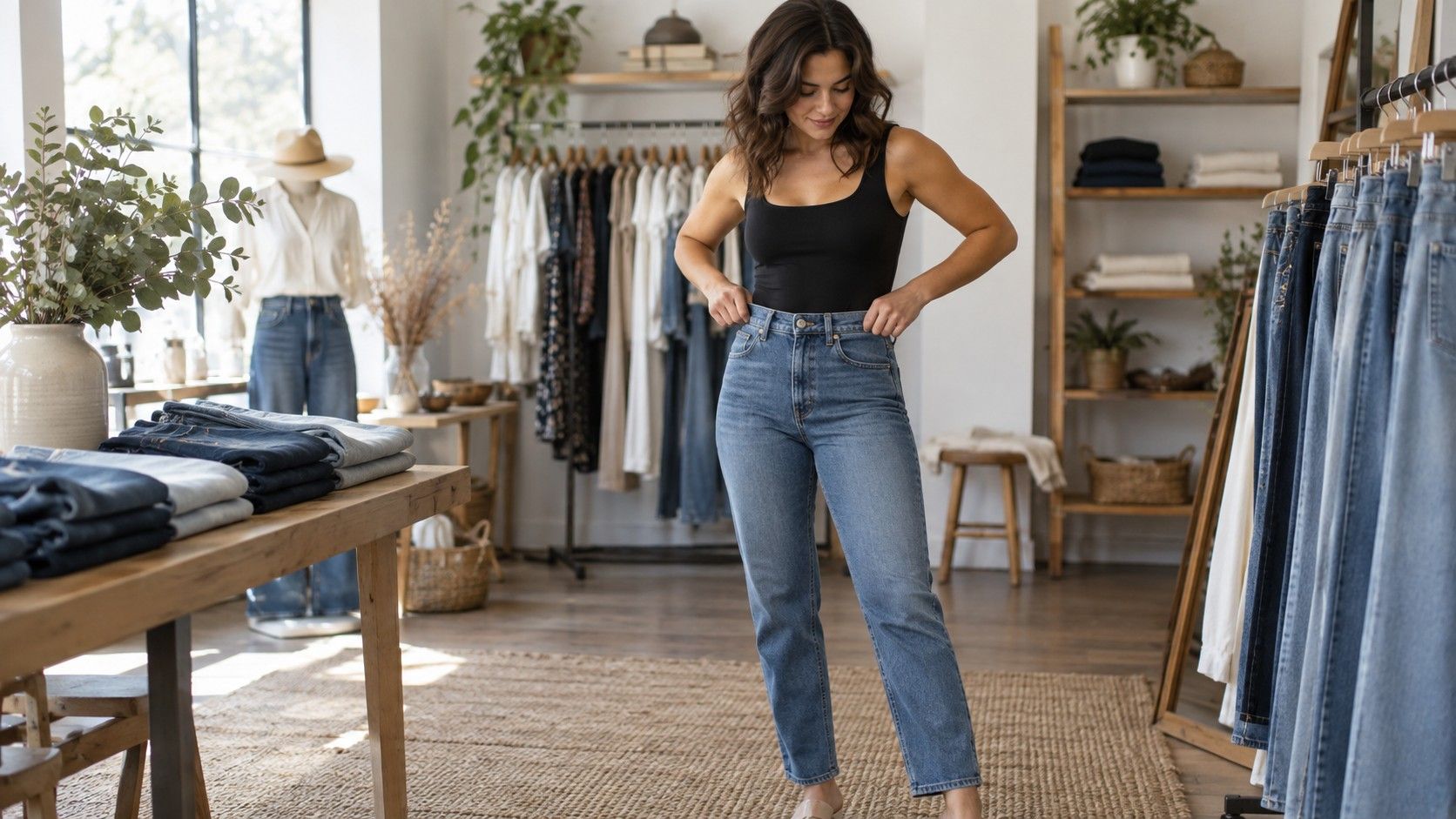
Look at the distance from shoulder to waist and from waist to floor. A longer torso or shorter leg line is not a problem to disguise; it is information about where a waistband, cropped knit, or jacket hem might feel most natural. The same trouser can look entirely different at mid-rise and high-rise.
Test one variable at a time. Pair a tucked top with two rises, or try the same trousers with an ankle-length and hip-length layer. Check the result while walking and sitting, not only while standing straight in front of a mirror. Comfort often explains why one proportion feels more convincing.
Vertical breaks matter. A sharp colour contrast at the waist, a long cardigan, or a belt can divide the outfit into sections. Sometimes that is the point; sometimes a low-contrast top and bottom make the line feel calmer. Neither effect is inherently more flattering.
| Detail | Try this comparison | What to observe |
|---|---|---|
| Waistband height | Same top with mid-rise and high-rise bottoms | Where the leg line appears to begin and how the top stays in place |
| Jacket length | Hip-length versus longer layer | Whether the hem lands at a comfortable visual break |
| Top contrast | Similar colours versus a strong horizontal contrast | How clearly the torso is divided |
| Trouser length | Full length versus cropped hem with the same shoes | Where the eye pauses and whether the hem feels intentional |
Check horizontal proportions in a real garment
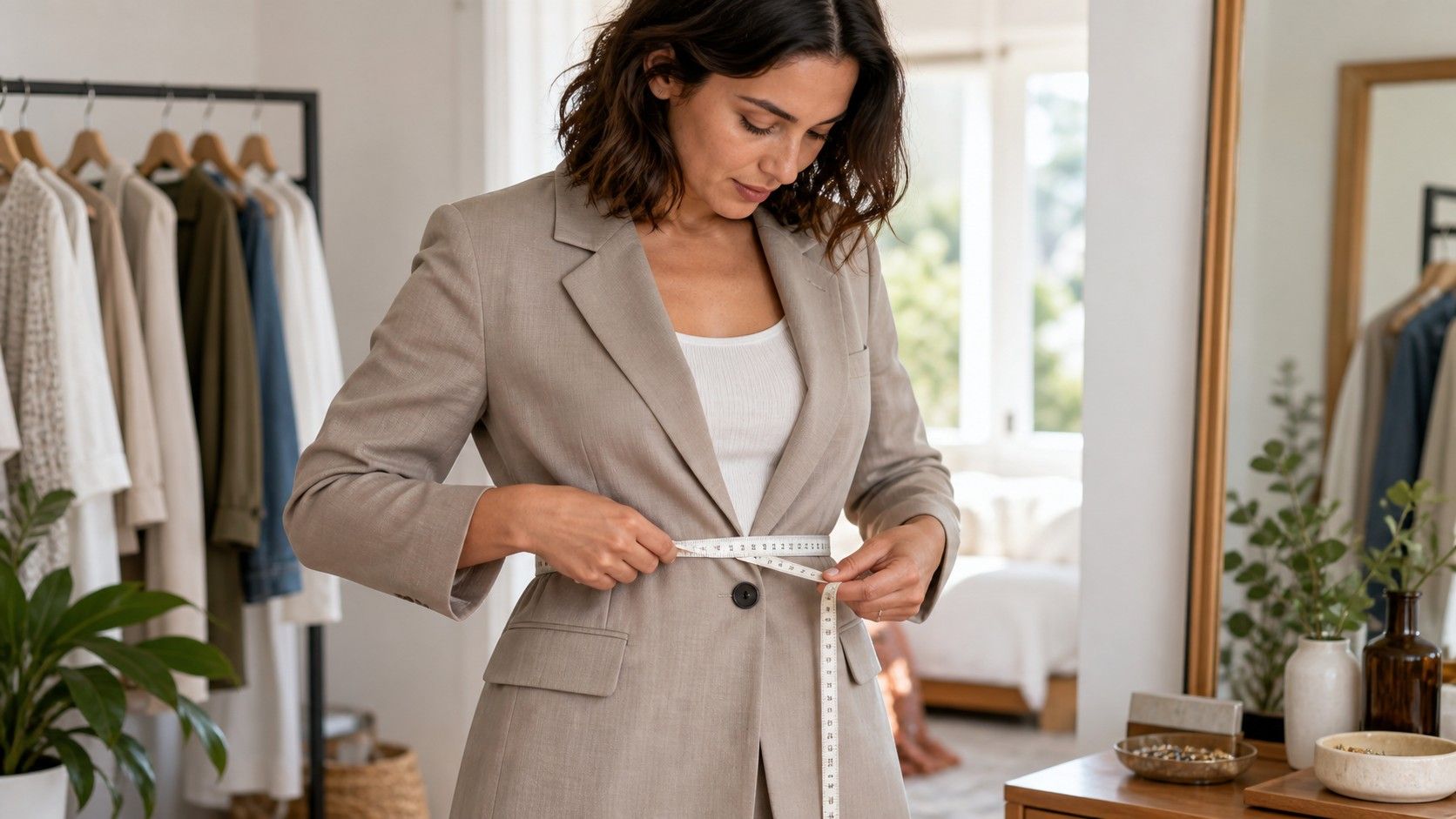
Horizontal proportion is about width and spacing. Notice the relationship between shoulder seam and shoulder point, the room across the bust or upper back, the width of a trouser leg, and the volume of a sleeve. These details change silhouette more reliably than a category name on a style chart.
Try a jacket with its buttons open and closed. If it looks easy open but pulls when closed, the question may be bust, back, or hip ease rather than “balance.” If the shoulder seam sits far beyond your natural shoulder, a smaller size or a different cut may be more useful than styling tricks.
Volume needs a practical test. A wider trouser can work with a roomy knit, but only if the fabric drapes and the waistband stays comfortable. Move your arms, sit down, and look at the side view; a good horizontal line should not require holding your breath.
Hems create endpoints, which is why garment length has such a strong effect. A top that ends at the widest part of the hip may feel different from one that ends just above it, even when the cut is identical. A skirt hem interacts with calves, shoes, and the width of the lower leg.
Rather than memorising rules about “best” lengths, make a short comparison at home. Fold a long T-shirt under, pin a dress temporarily, or use two jackets with similar shoulders and different lengths. Take a few steps and notice which version you stop adjusting.
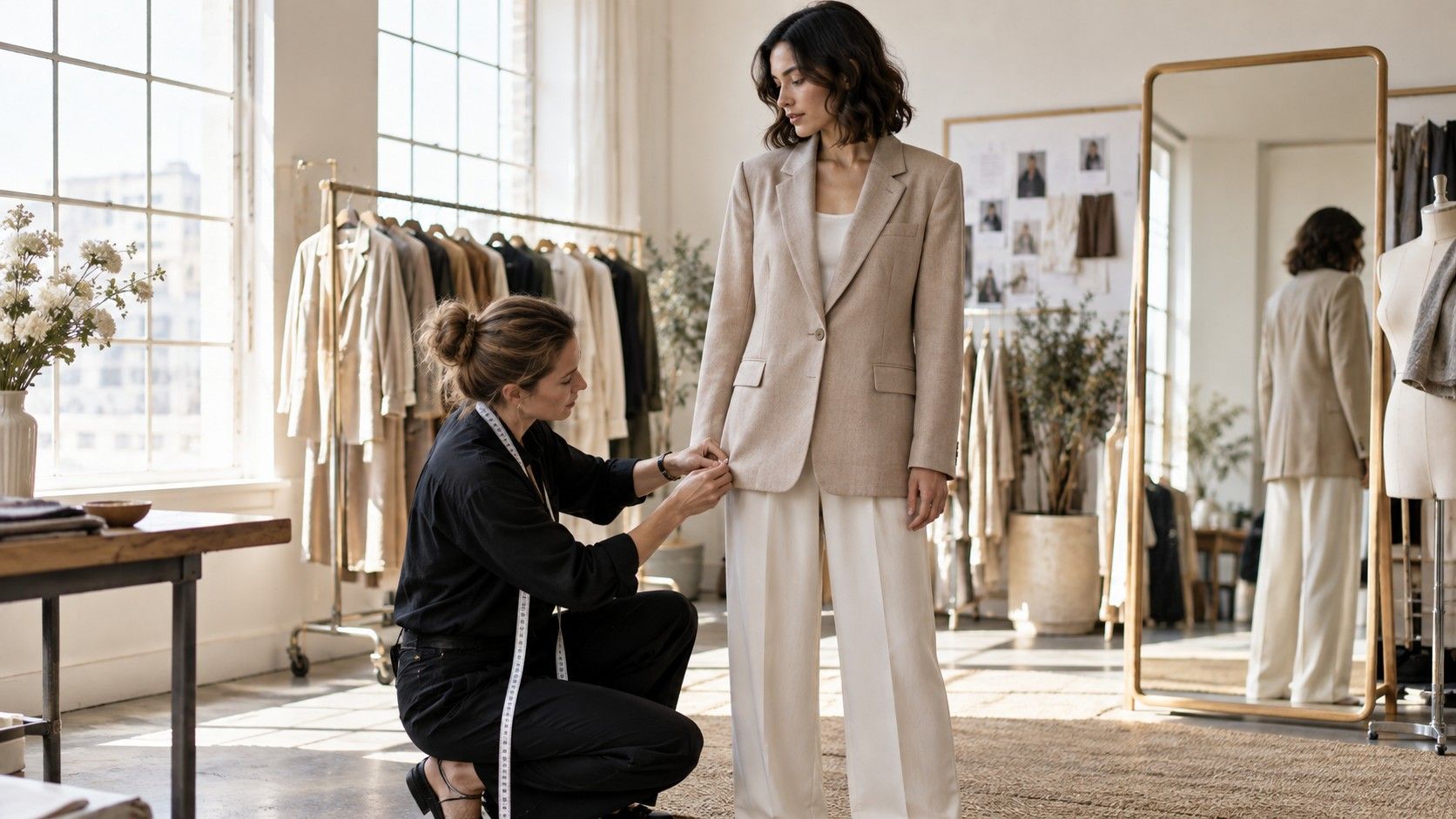
Tailoring can be especially effective here. Shortening a sleeve, lifting a shoulder seam, or adjusting a trouser hem often changes the whole proportion of an outfit. The size chart gets you into the right neighbourhood; small alterations can make the address work.
Fit comes before styling theory
Before interpreting visual balance, check basic fit. The shoulder seam should allow arm movement, the waist should let you sit, and the hip area should not strain when you walk. A garment that is uncomfortable will look awkward no matter how well its proportions match a guide.
Keep notes from clothes that earn repeat wear: “cropped cardigan works over dresses,” “straight jeans need a slightly longer top,” or “square neck needs a secure bra.” These records are more personal than generic body proportion advice and more useful on a rushed morning.
The point is not to make every outfit symmetrical. It is to understand the levers you can move—rise, length, width, contrast, and layering—so your clothes feel intentional and still leave room for taste.
Shoes deserve a place in the comparison. Ankle straps, chunky soles, and a strong contrast with trousers create another visual break, while a shoe close to the trouser colour lets the line continue. Try the same outfit with two pairs before deciding a hem length is the problem.
Use proportion as an option menu, not a correction project. A deliberately oversized shirt or low-slung trouser can be exactly the look you want. Knowing what a choice does visually gives you freedom to repeat it or change it.
The best outfits still need ordinary life checks: stairs, a chair, a coat, and a long day. When the line works in motion as well as a mirror, it is worth keeping.
Use these observations as a practical fitting note when comparing a size chart, not as a restriction. Check the garment in motion, allow for fabric and ease, and retain the option that feels comfortable through a normal day. A careful repeat of this check makes shopping calmer and gives you useful evidence for the next item as well.
Keep the number or label only when it helps you make a specific choice. Personal preferences, posture, and construction remain part of the result, so there is always room to choose the cut that feels most like you.