The apple body shape label is commonly used for a fuller-looking midsection, often with a noticeable bust and relatively slim legs. It can be useful shorthand when shopping, but it should never be mistaken for an instruction to conceal a body. The better question is practical: where does a garment need ease, where does it need structure, and does it still feel good after an hour of normal life?
Let comfort be the first filter
Many people who identify with an apple shape have been taught to look for clothes that “skim.” Skimming is helpful only if it means enough room to breathe, sit, and bend. A blouse that hangs smoothly while standing but catches at the midsection when you reach for a bag is not a better fit because it looks tidy for ten seconds.
Get the shoulders right before judging the rest
Check ease at the bust, upper arm, and stomach separately. They do not always need the same amount of fabric. Woven shirts may require a larger size for the bust and a small adjustment at the shoulders; knits may feel easier but can cling when the fabric is too thin. Medium-weight jersey, soft poplin, and fluid woven fabrics often give more predictable results than fabric that is either stiff as paper or very flimsy.
Compare dresses, trousers, and skirts by how they behave
Shoulder fit anchors a top, jacket, or dress. The seam should land close to the shoulder point, and the armhole should let you reach a steering wheel or keyboard without lifting the entire garment. When shoulders are too broad, the neckline may slide and the sleeves look heavy; when they are too narrow, the back can pull even if the torso has plenty of room.
Once the shoulder line works, choose a neckline according to comfort and preference. A V-neck can create open space near the face, a scoop can feel relaxed, and a shirt collar can add structure. There is no requirement to create a vertical line. Test neckline depth by bending forward and by looking down at your phone, since both reveal whether the garment will stay where you expect.
| Outfit part | Movement test | Useful adjustment |
|---|---|---|
| Top | Reach overhead and sit | More bust ease or a softer fabric |
| Jacket | Cross your arms | Check shoulder width before sizing up |
| Dress | Walk and take a full breath | Try a higher or lower waist seam |
| Trousers | Sit for five minutes | Compare rise and waistband stretch |
Use layers to change function, not to hide
Layering can make an outfit warmer, more polished, or more adaptable to an office with cold air conditioning. An open shirt, blazer, cardigan, or lightweight overshirt changes the outline without needing to camouflage anything. Look at hem placement: a layer that stops at the fullest point of the torso may catch there, while one that ends a little above or below can hang more freely.
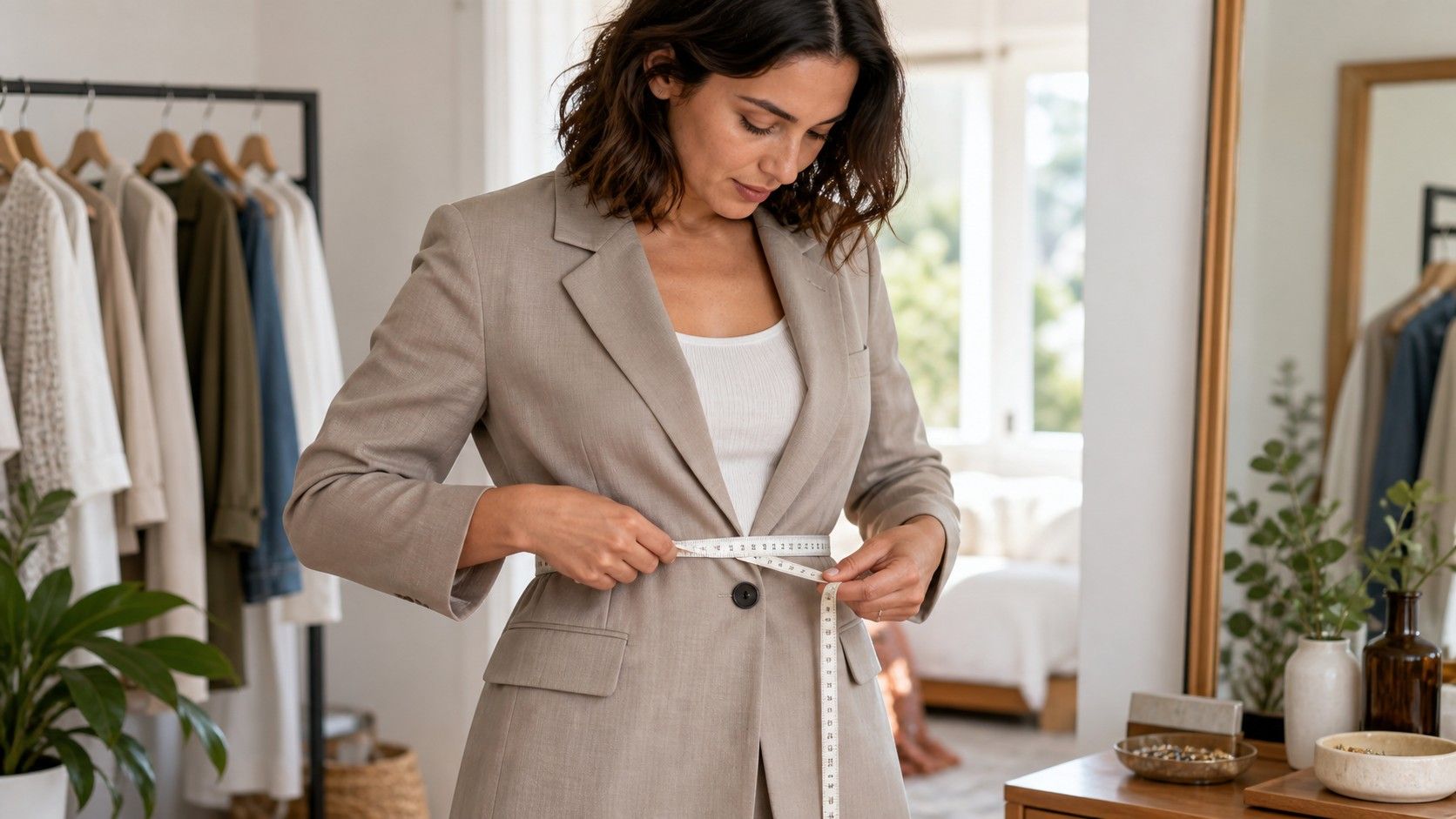
Pay attention to jacket structure. A very rigid lapel, thick shoulder pad, or tightly buttoned front can feel restrictive through the bust. A softer blazer with enough upper-back room may be more wearable. Wear it both open and closed before deciding. If it only works in one carefully arranged pose, it is a styling prop rather than a dependable layer.
Apple shape clothing is often described with a narrow list of dress styles, but dresses vary enormously in seam placement and fabric. A shift dress can be easy and modern when it has enough bust room. A gently shaped dress can define a waist if you enjoy that. An empire seam should sit below the bust rather than cut across it, and a wrap dress should remain secure while seated.
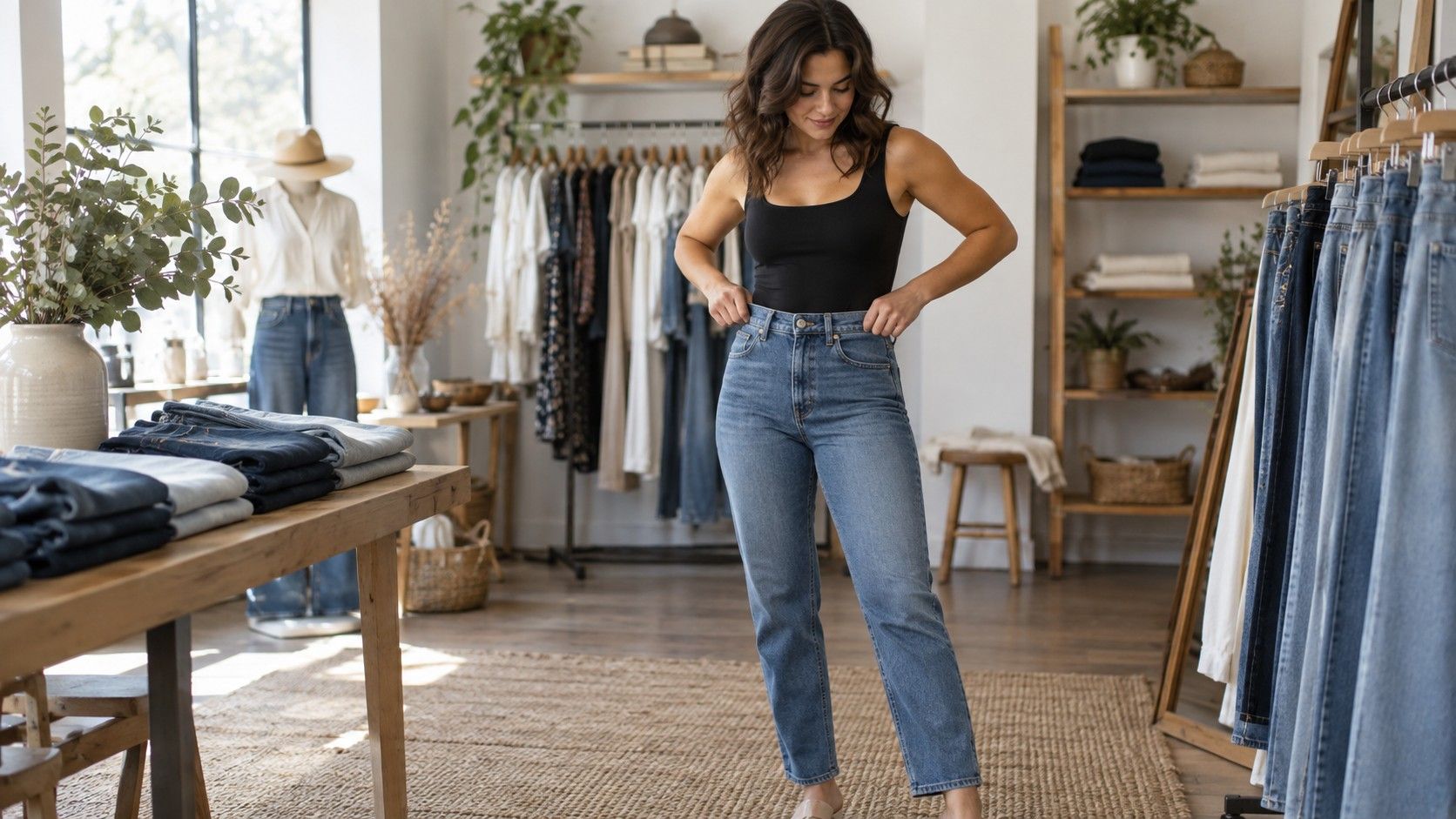
For trousers and skirts, the rise deserves more attention than the label “high” or “mid.” The right rise is the one that stays put without pressing into the stomach. Straight legs, wide legs, tapered ankles, shorts, and skirts can all work. Try each with the shoes you wear most. A changing-room mirror cannot show whether a waistband will roll during a commute, but a few squats and steps give a useful preview.
Use fabric weight and hem placement as quiet tools
Fabric weight is easy to overlook when buying online. Very thin jersey can cling and twist, while very stiff fabric may stand away from the body in a way that feels awkward. A medium-weight knit or woven fabric with some drape often makes an outfit easier to live in. Run a hand over the inside as well: a rough seam, a tight lining, or a scratchy label can make a technically good fit unwearable.
Hem placement is equally personal. A tunic may feel great over slim trousers but catch when paired with a fuller skirt; a cropped jacket can work over a dress and feel too short over high-rise trousers. Photograph two or three combinations from the side, then choose the one that feels least fussy. You are looking for an outfit that stays comfortable after lunch and a short walk, not one that wins a single mirror moment.
When shopping online, use garment measurements as a starting point instead of relying on a familiar size. Compare bust, upper-arm, and body length with a favourite top laid flat. Keep a note of the fabrics that feel best on busy days. That small record makes returns less frequent and gives you a more useful guide than a universal list of supposedly flattering cuts.
Adjust an almost-right outfit before replacing it
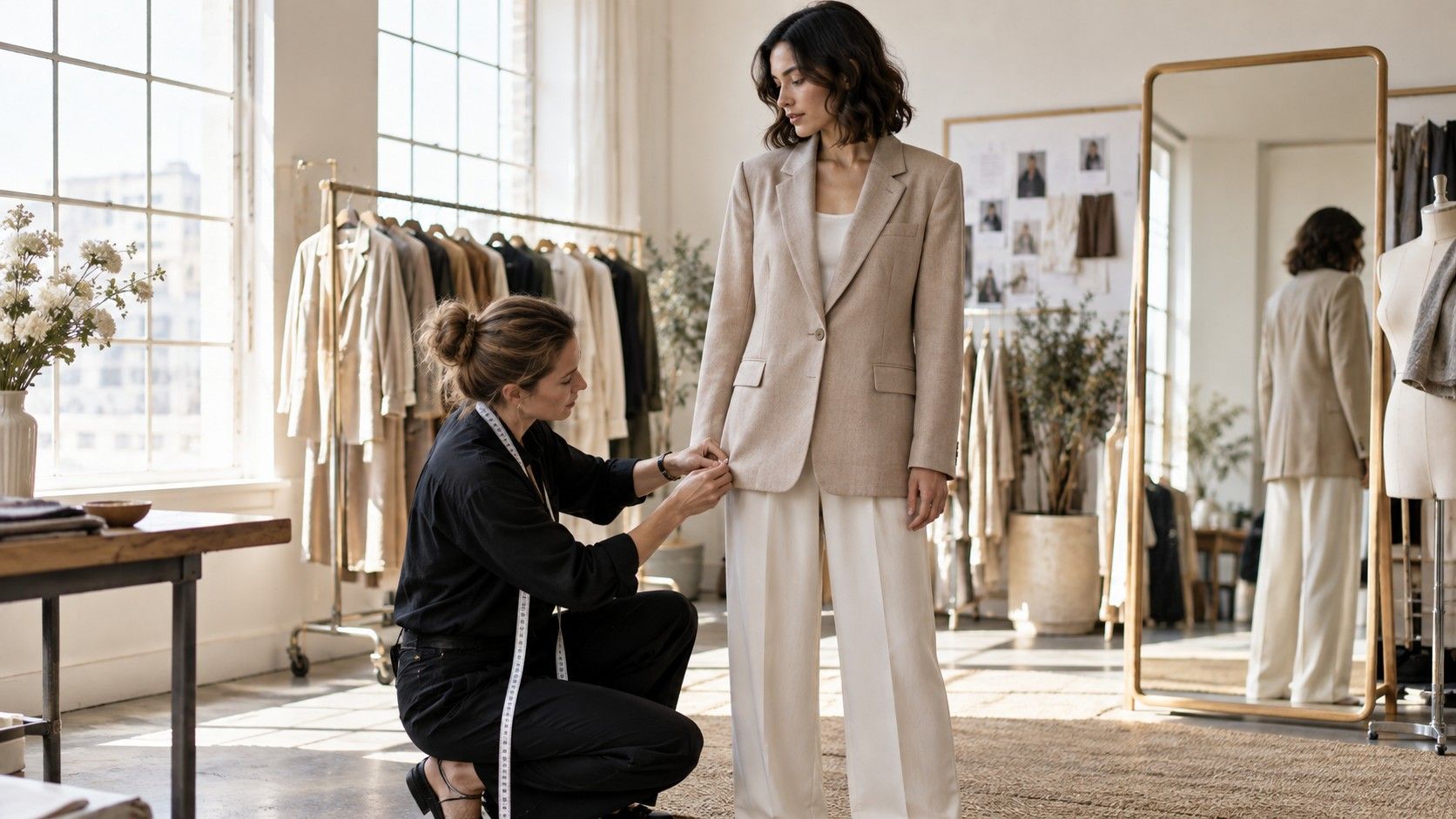
Small changes often rescue a garment. A front tuck can reduce extra length without making the stomach a focal point. Rolling a sleeve exposes the wrist and can make a loose shirt feel intentional. Changing to a smoother bra or slip can alter how a fabric falls, while a tailor can shorten a hem or adjust a side seam far more precisely than another round of online ordering.
Round body shape outfits do not need to follow a hiding strategy. Choose colour, print, fit, and coverage for the day you are having. Keep the pieces that let you move normally and make you forget about them, then use those as your reference when shopping. A body-shape label is only useful when it helps you notice better fit; it has done enough once it starts narrowing your options.