Shopping advice for a pear body shape often starts by telling people how to make their shoulders look wider. That can be a fun styling choice, but it misses the daily question: does the waistband stay comfortable, do the hips have enough room, and can you move without pulling at every seam? Good fit begins there, with the body you have rather than a balancing act you are required to perform.
Understand the label without turning it into a rulebook
A pear or triangle body shape generally describes hips that are visually wider than shoulders, often with a defined waist. It does not mean all weight sits in one place, nor does it prescribe a size, a height, or a wardrobe. Hip curve, thigh shape, torso length, and shoulder posture affect fit far more than a category on its own.
Start with hip and waist comfort before styling the top half
Take the label as a search term for useful construction details. It can point you toward trousers with more hip ease or tops with a shoulder seam that actually lands correctly. It should not stop you from wearing a narrow skirt, a plain T-shirt, or any colour you enjoy. The goal is information, not a set of permission slips.
Compare trousers, skirts, and dresses in real movement
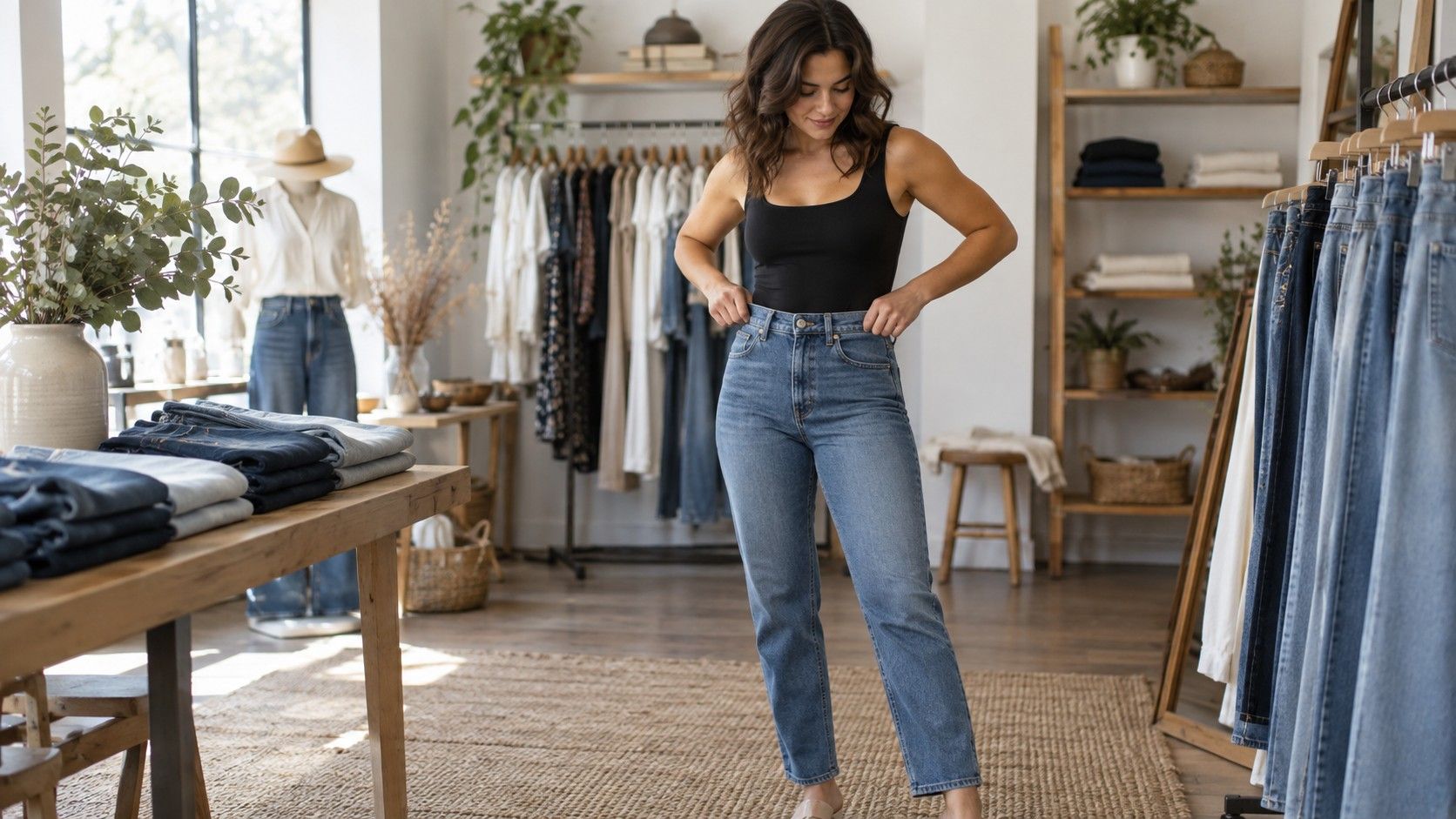
In pear shape clothing, the most common fitting compromise is buying for the hips and accepting a loose waist. Check the side seams first: they should sit straight rather than bend toward the front, and pockets should remain flat. Then sit down. A waistband that seems fine while standing can cut in at the lower abdomen or gape at the back once a chair changes the angle of the body.
Curved waistbands and trousers with a shaped back yoke often accommodate a fuller hip more naturally than a straight, rigid band. Stretch can help, but excessive stretch may mean the fabric bags out by lunchtime. If everything fits except the back waist, a simple alteration is often more useful than endlessly searching for a different size. It preserves room where your body actually needs it.
| Garment | Useful fitting check | Try another cut if |
|---|---|---|
| Jeans | Squat and sit with pockets flat | The waistband gaps or thighs pull |
| Skirt | Walk up two steps | The hem rides upward at the back |
| Trousers | Check side seams in a mirror | They twist toward the front |
| Dress | Turn sideways and lift your arms | The waist seam migrates upward |
Choose tops by shoulder fit, not by a promise of balance
A top that fits your shoulders gives the whole outfit a calmer line. The shoulder seam should finish near the shoulder point; if it falls down the arm, the neckline can feel loose even when the chest fits. A crew neck, V-neck, square neck, shirt collar, or boat neck can all work. The difference comes from how the fabric sits and whether you enjoy the visual effect.
If you want more emphasis near the face, texture, a lighter colour, a distinctive collar, or a sleeve with a little volume can do it. None is mandatory. Sometimes the best top with wide-leg trousers is simply a smooth knit that tucks without bunching. In a fitting room, raise your arms and look down: if the armhole pulls the bodice up, move on, regardless of how flattering the neckline seemed at first glance.
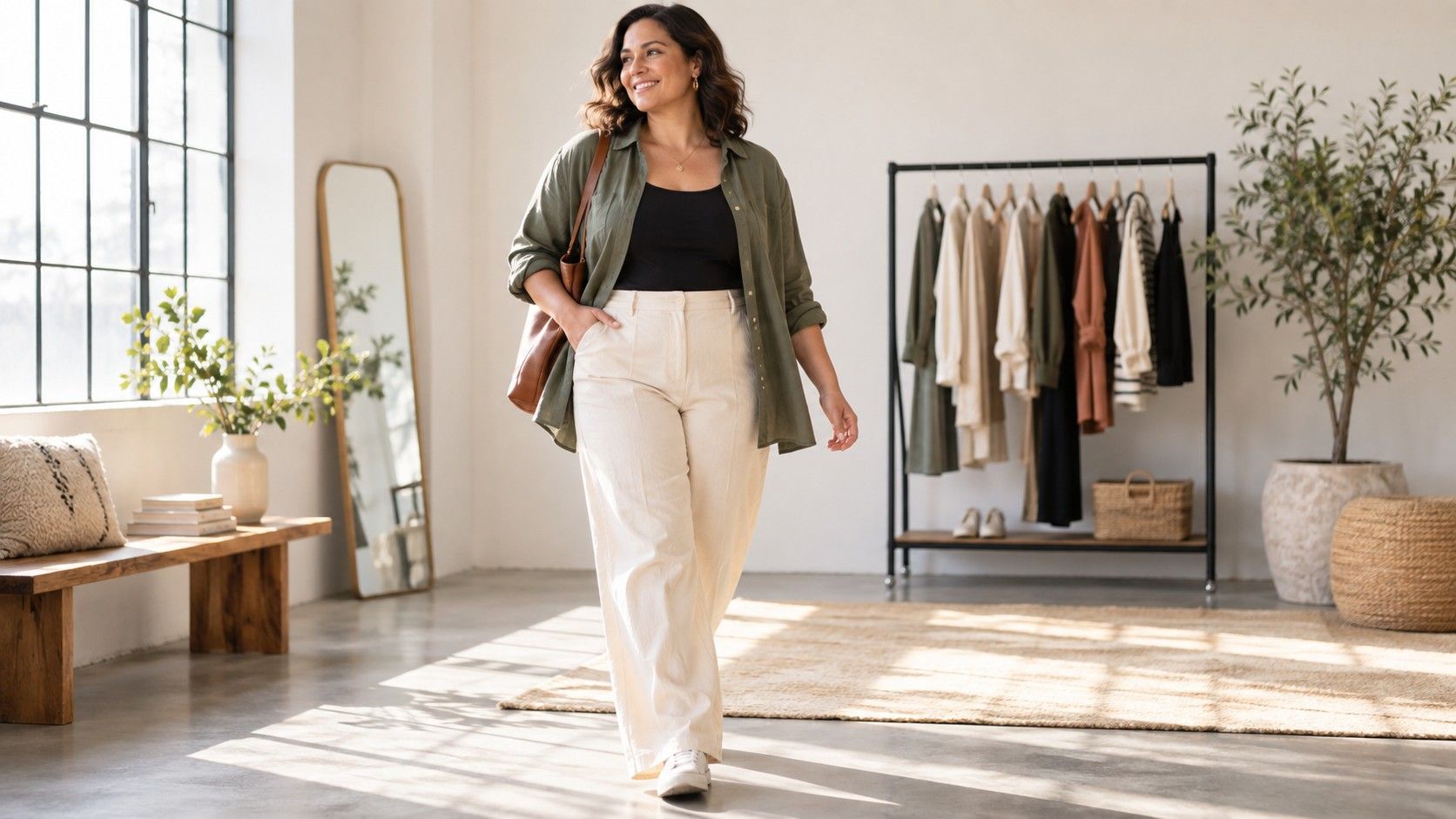
Straight-leg, bootcut, wide-leg, and relaxed trousers can all suit a triangle body shape because they offer different amounts of room below the hip. The important measurement is not the label on the leg; it is the width and drape at the upper thigh, plus where the rise settles. A clean straight leg can feel polished, while a wider leg may feel breezier in warm weather.
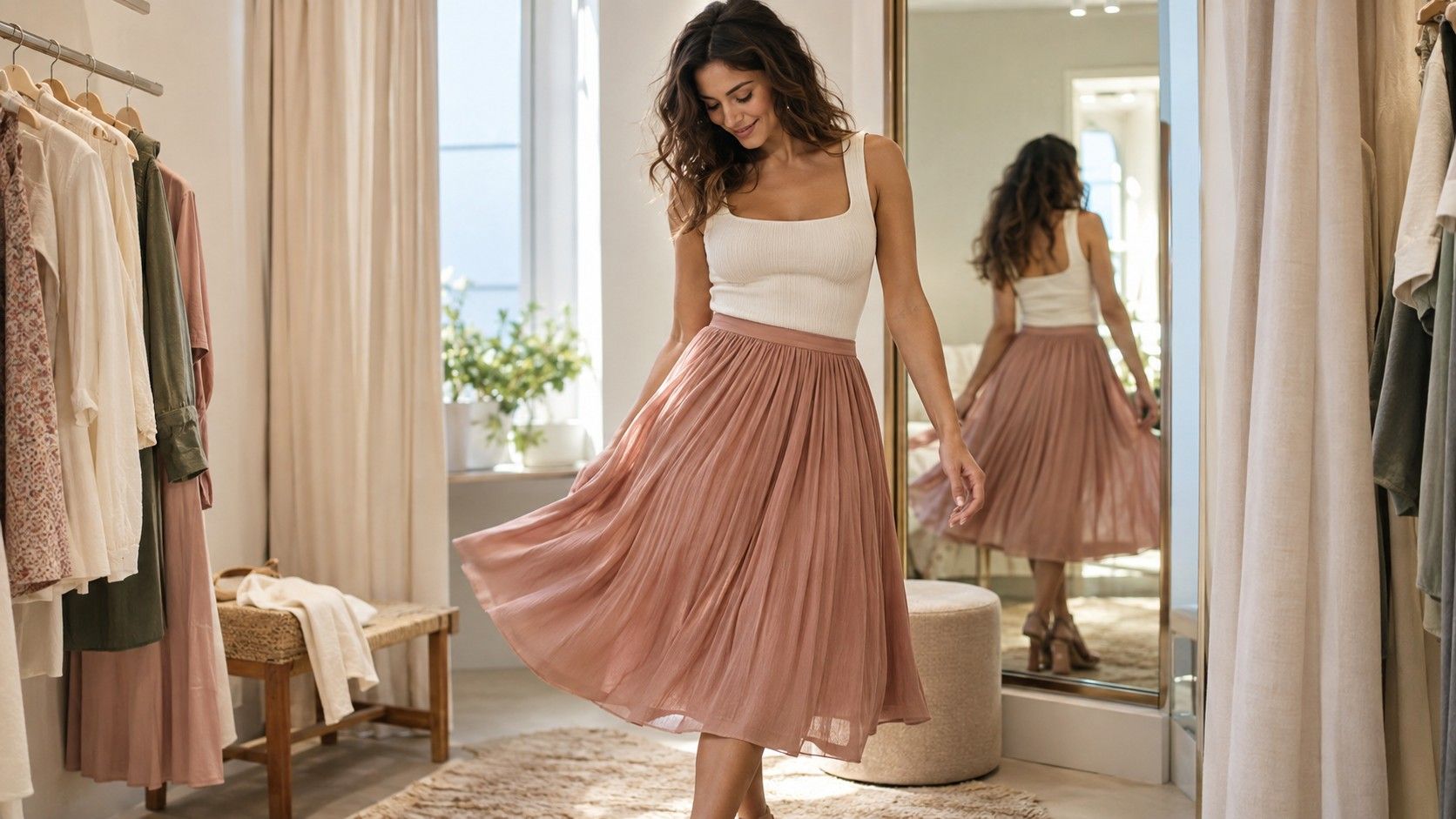
For skirts, notice the transition from waist to hip. A-line styles skim without clinging, but a pencil skirt with a back vent can be just as comfortable when the fabric has recovery and the waist is right. Dresses add another variable: the waist seam should land where you want it, and the skirt should not pull forward as you walk. Take a few full steps before judging the mirror image.
Use fabric, pockets, and hems as final fit clues
Fabric tells you whether a promising cut will remain useful. Rigid denim can be excellent when the hip and rise are generous, but it gives very little forgiveness on a long walk. A drapey trouser may skim the hip beautifully yet show every pocket bag if the fabric is too thin. Check garments in daylight if possible; dark fitting-room mirrors are very good at hiding a pulling seam or a pale pocket outline.
Hem width affects movement more than many shoppers expect. A narrow pencil skirt needs a vent or stretch, and a tapered trouser needs enough room at the knee to climb stairs. Do not judge by the number on the tag. Compare the garment with one at home that you already wear comfortably, paying attention to its rise, hip measurement, and the way its fabric recovers after sitting.
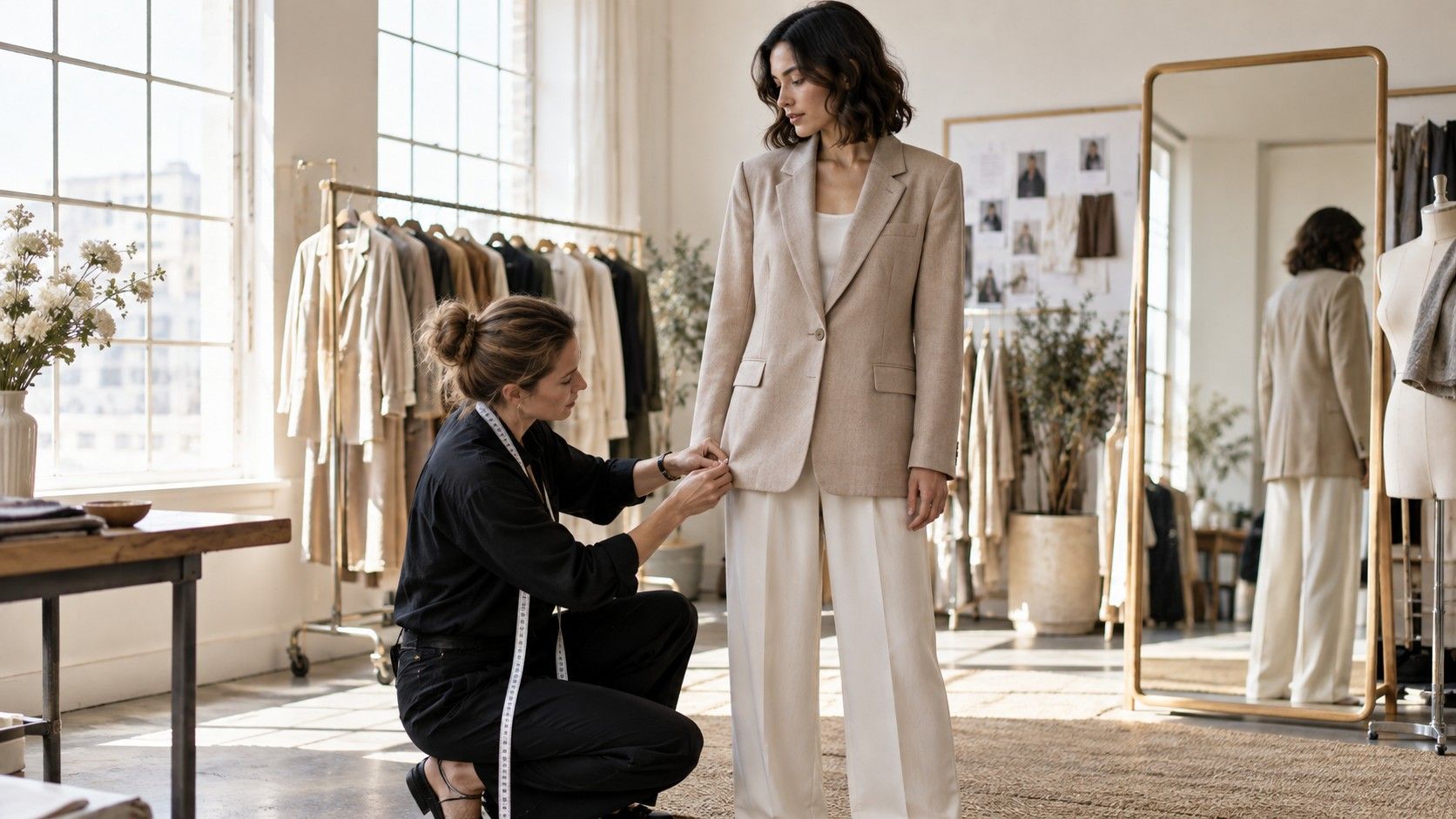
There is also no prize for keeping a garment exactly as it came from the shop. A tailor can alter a center-back waist, shorten a skirt to a more useful point, or remove an awkward pocket. Buy for the fullest measurement and judge whether the remaining adjustment is small and worthwhile. That approach is usually more reliable than forcing every item to fit every point without help.
Make balance optional and repeat the combinations you trust
Visual balance is a tool, not a correction. You may like an outfit that gives equal attention to shoulders and hips, or you may prefer a long, uninterrupted vertical line. A dark bottom and a bright top is one easy formula, but so is a monochrome outfit, a printed skirt, or a sharply tailored jacket over a simple dress. Personal style has more range than old-fashioned diagrams imply.
When an outfit feels almost right, identify the smallest adjustment first: a different tuck, one rolled sleeve, a hem change, or a less rigid belt. That is cheaper and kinder than declaring an entire garment category unsuitable. Over time, keep track of the shapes that let you commute, work, eat, and relax without monitoring your clothes. That practical knowledge is the strongest pear body shape fit guide.