The inverted triangle body shape is usually described as shoulders that read wider than hips. That description can be useful when a jacket always feels restrictive at the upper back or when a sleeve head sits oddly, but it should not become a campaign to make shoulders disappear. Start with comfort at the shoulder line, then choose the amount of balance, structure, or drama that you genuinely like.
Recognise the label without making it your identity
Broad shoulders can come from bone structure, muscle, posture, bust, or simply the way a garment is cut. The inverted triangle label does not predict your size or tell you how your waist, hips, or legs will fit. It is only a way to notice that the upper body may need a different fit allowance from the lower half.
Get the shoulder fit right first
Look at your own wardrobe for evidence. Do tops pull across the back while trousers fit easily? Do blazers fit in the waist but feel narrow at the shoulder seam? Those patterns are more helpful than comparing yourself with a stylized body chart. They lead directly to construction details worth checking in a shop or when reading a product description.
Compare lower-body options without treating them as a correction
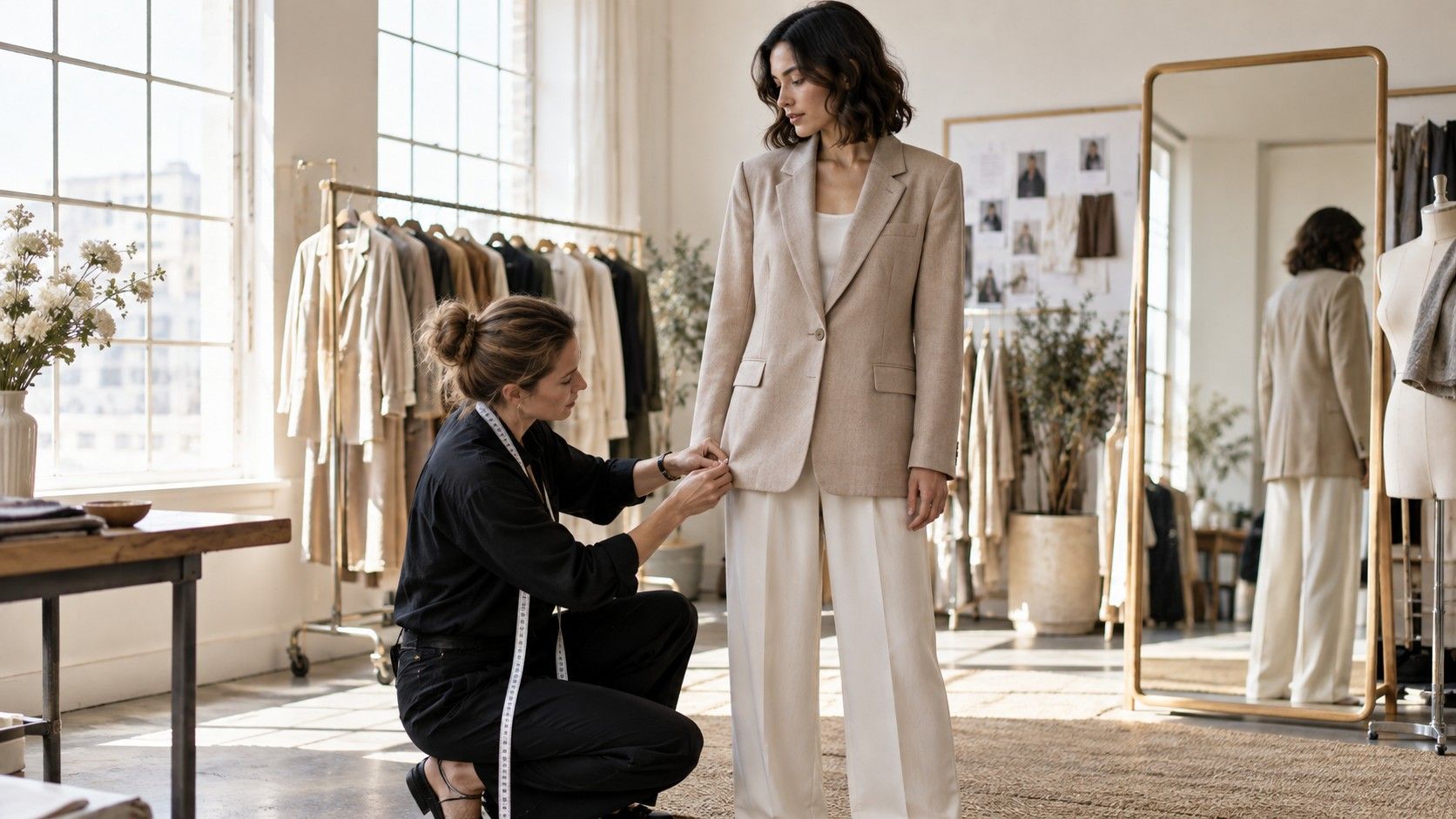
For inverted triangle clothes, shoulder fit is non-negotiable because everything else hangs from it. A shoulder seam should finish close to the bony point of the shoulder. If it sits too far inward, the sleeve can pull upward and the upper back becomes tight; if it drops too far down, the garment may look untidy and restrict arm movement in a different way.
Do a simple reach test in every structured top or jacket: stretch both arms forward as if holding a steering wheel, then raise one arm. The garment should move with you without climbing toward the neck. Sizing up can provide room, but it may leave the neckline and sleeves too large. A cut with more upper-back ease, a raglan sleeve, or a less rigid fabric can be a better answer.
| Feature | What to check | Why it matters |
|---|---|---|
| Shoulder seam | It ends at the shoulder point | Keeps sleeves and neckline stable |
| Sleeve head | Lift and cross your arms | Reveals hidden upper-back restriction |
| Jacket front | Button it once, then sit | Shows whether structure is wearable |
| Lower half | Walk and use pockets | Tests volume without sacrificing movement |
Choose necklines, sleeves, and layers for the feeling you want
Necklines can change an outfit's mood, not just its proportions. A V-neck often feels open, a scoop neck soft, a crew neck graphic, and a collared shirt more structured. Try the same top with your hair up and down, since that can change what you notice around the shoulders. There is no obligation to avoid boat necks, cap sleeves, or shoulder detail if you like them.
Sleeves deserve the same freedom. A slim sleeve can make a blazer feel sharp, while a fuller sleeve can be expressive and comfortable. The practical distinction is whether the sleeve head is well cut and whether there is enough room at the upper arm. For layers, check the total fabric at the armhole. A shirt that works alone may become restrictive under a stiff jacket, even when both pieces fit individually.
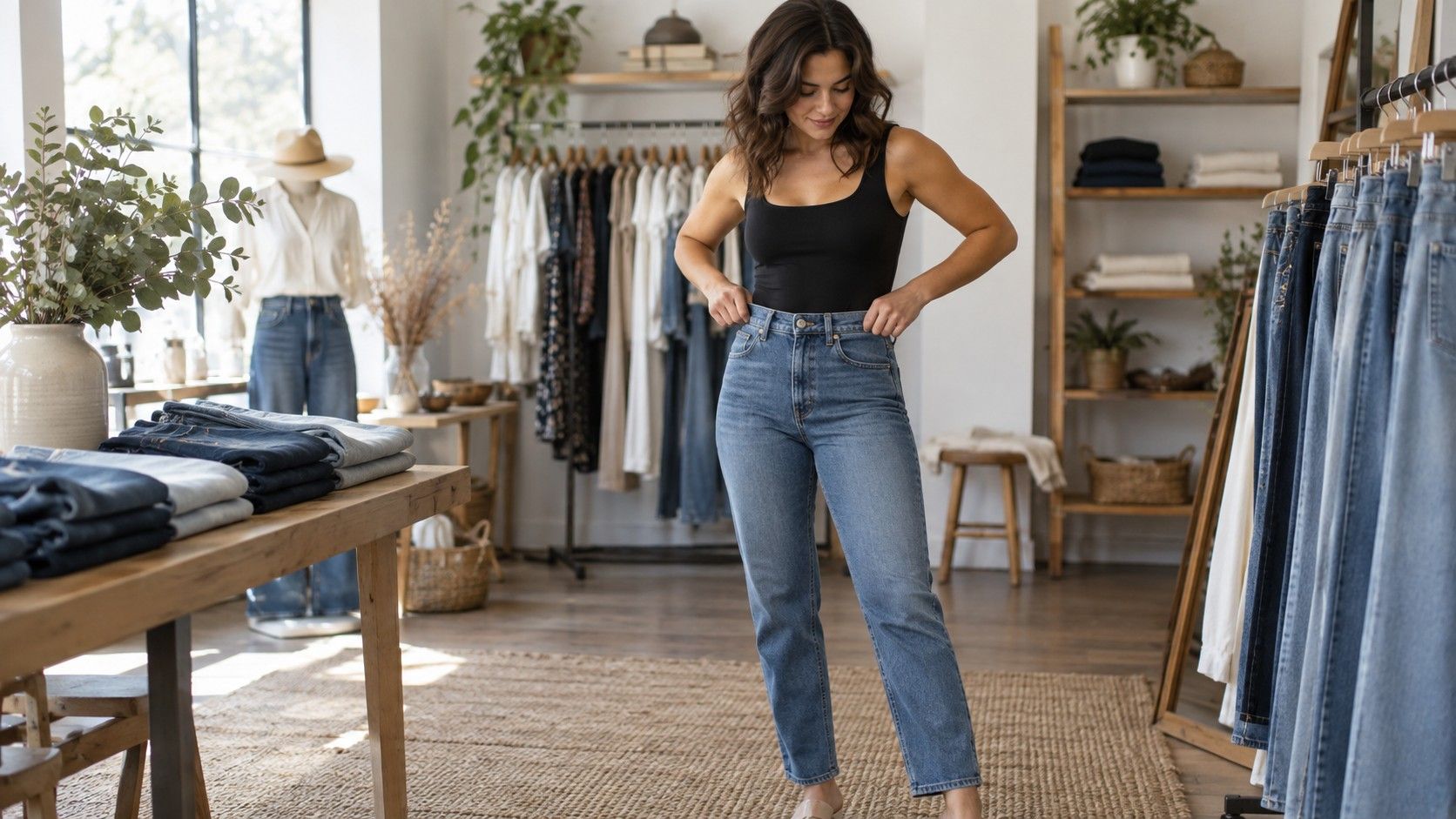
Wide-leg trousers, pleated trousers, straight jeans, full skirts, shorts, and slim trousers can all be part of broad shoulders outfits. Wider shapes below the waist can create visual balance if that appeals to you, but the fit should still be judged at the rise and hip. A wide leg that twists at the thigh or a pleat that opens permanently is not serving the outfit just because it changes the outline.
Try lower-body volume with the tops you own. A wide trouser may need a shorter or tucked top to keep the waistband visible, while a full skirt can work beautifully with a relaxed knit. If you prefer narrow jeans or a column skirt, keep them. An outfit can be deliberately top-heavy, athletic, or dramatic; balance is one visual option, not the only attractive result.
Check jacket structure and fabric before committing
Jackets can be the hardest purchase for an inverted triangle shape because a sharp shoulder, thick lining, and narrow upper back can combine into a garment that looks fine on a hanger but feels restrictive at once. Try the jacket over the sort of knit or shirt you will really wear. A blazer should allow you to drive, type, and reach a rail without creating a ridge across the back.
Fabric alters the result. Soft wool, ponte, washed cotton, and unlined layers tend to follow movement more easily than a very rigid synthetic blend. That does not make structure wrong; it just makes the fit check more important. If the shoulders fit but the body feels loose, a tailor may be able to refine the waist. If the shoulder is tight, choose another cut rather than hoping the fabric will break in.
Outerwear deserves a separate check because it adds another layer at the armhole. Put on the coat with a jumper underneath, fasten it once, and swing your arms naturally. A coat can look generous when open and still feel narrow through the upper back when closed. The best option has enough room for your actual winter routine, not just a thin fitting-room top.
Choose balance only if it makes the outfit feel like you
Old inverted triangle advice often focuses on minimizing shoulders. That framing is unnecessary and can make shopping exhausting. You can use a darker jacket, a longer necklace, a textured skirt, or a wide trouser because you enjoy the composition, not because your body needs correction. Equally, you can wear a bold shoulder, a halter, or a sleeveless top when that is the look you want.
Build a reliable reference list from your own clothes: shoulder seams that work, sleeve shapes that do not bind, rises that stay comfortable, and jacket lengths you reach for. This makes online shopping more precise and reduces the temptation to buy a garment based on a flattering promise. The best inverted triangle outfit is one that lets you move freely and makes your shoulders feel like part of you, not a problem to manage.