The hourglass body shape is often reduced to a neat drawing with a small waist between matching bust and hip lines. Real bodies and real clothes are less tidy. A useful starting point is not trying to recreate that drawing, but noticing where a garment pulls, floats away, twists, or makes moving through an ordinary day feel harder than it should.
What the hourglass label can and cannot tell you
People usually use hourglass body shape to describe a visible waist with bust and hip measurements that are relatively close. It says nothing useful about height, shoulder slope, ribcage depth, muscle, posture, or where someone likes clothes to sit. Two people with a similar waist-to-hip difference may need completely different jeans because one has a long rise and the other has a fuller seat.
Check bust, waist, and hip ease in that order
Use measurements as clues, not a verdict. A tape can show whether the waist is distinctly smaller, but the mirror and a short movement test explain more. Raise both arms, sit on a low chair, and take ten normal steps. If a wrap dress stays closed only while standing still, or a fitted shirt opens at the bust when you reach for a shelf, the label has not solved the fit problem.
Build separates around a dependable waistband
On a dress or a woven top, begin with the largest point the garment must travel around. For many hourglass figures that is the bust or hips, not the waist. Pulling the waist in with a belt cannot create fabric that is missing at the bust, and buying a size down to show a waist usually makes side seams strain. Look for smooth fabric across the chest, armholes that do not bite, and side seams that stay vertical.
Then assess waist placement. The narrowest point of a body and the narrowest point built into a garment are not always the same. A waist seam that sits two inches too high can make a comfortable dress feel tight under the ribs; one that sits too low may bunch at the back. Pinching excess fabric temporarily at the side can reveal whether the issue is simply shaping, rather than an unsuitable size.
| Fit point | Quick check | What a warning looks like |
|---|---|---|
| Bust | Reach forward and breathe deeply | Buttons gap or the neckline lifts |
| Waist | Sit for several minutes | Seam digs in or rolls upward |
| Hips | Take a normal stride | Side seams pull toward the front |
| Back | Turn and look over one shoulder | Fabric catches across the shoulder blades |
Dresses work best when the shape has room to move
A dress does not need a dramatic nipped waist to work for an hourglass figure. A softly shaped sheath, a shirt dress with a tie, a knit column, or a dress with a waist seam can all be comfortable when the proportions line up. The useful question in a changing room is whether the garment follows the body without demanding that the body stay in one pose.
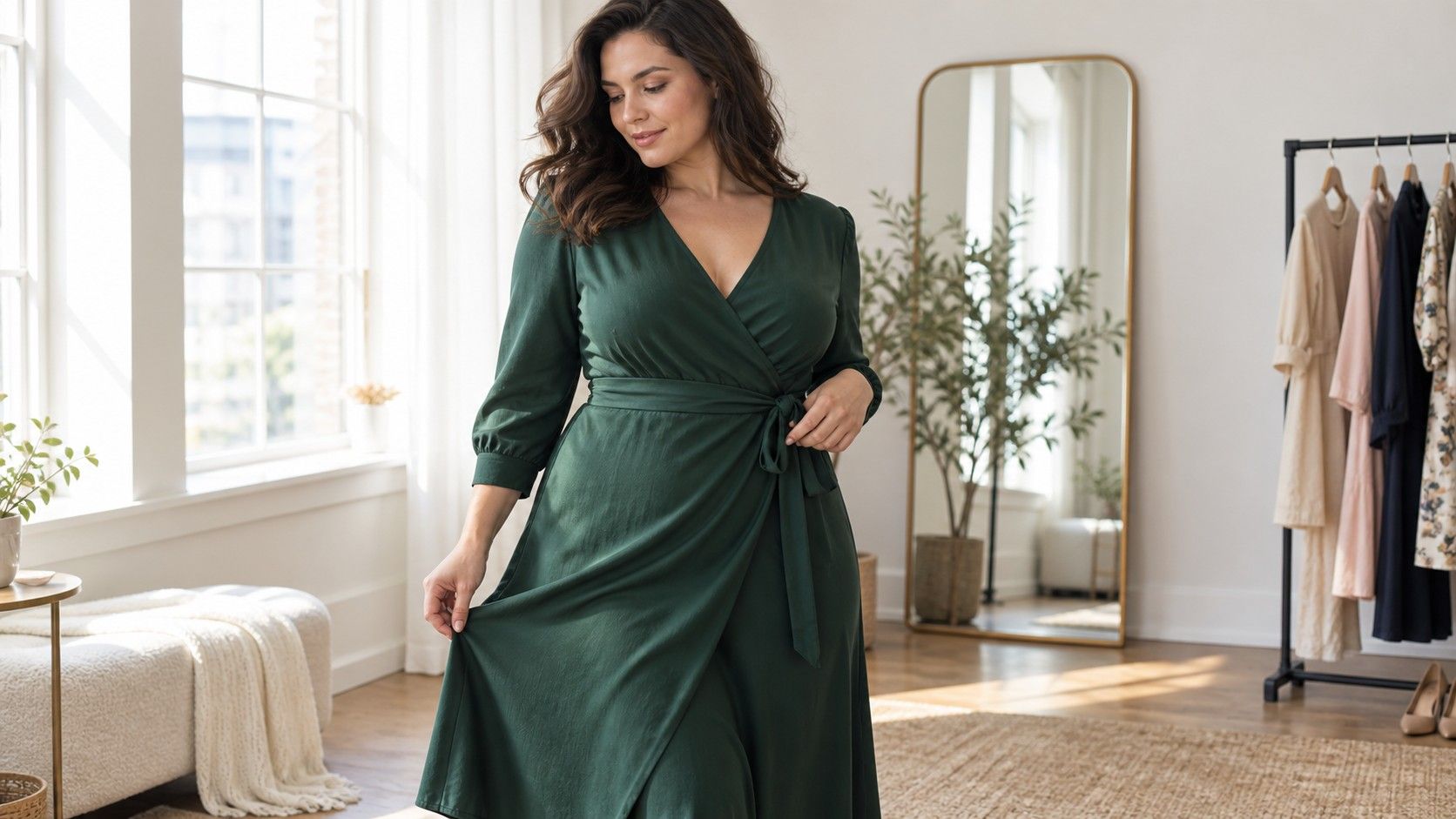
Wrap styles deserve a closer look than their reputation suggests. The overlap should remain secure when sitting, and the tie should adjust without dragging the neckline sideways. A hidden snap or a camisole may help, but if the entire front shifts each time you move, the cut is probably too shallow through the bust. For a day involving stairs, a commute, or a meal, that detail matters more than the silhouette on the hanger.
Trousers and skirts are often the difficult part of hourglass clothing fit because the waist and hip ratio in ready-to-wear is standardized. A waistband that fits the hips may stand away at the back; one that hugs the waist may be restrictive across the seat. Curved waistbands, contoured seams, stretch woven fabric, and a small alteration at the center back can solve this more cleanly than pulling a belt tight over excess fabric.
Rise changes the experience. A high rise can feel secure when it meets the natural waist, but it becomes uncomfortable if it ends at the widest part of the torso or if the front curve is too short. Mid-rise trousers can be excellent when the waistband stays put while seated. Test both with the top you expect to wear: a tucked shirt can reveal pressure points that a fitting-room T-shirt hides.
Use jackets and layers to check proportion, not hide it
Fitted jackets are frequently recommended for an hourglass shape, yet a jacket should first fit the shoulders and upper back. Shoulder seams should end near the shoulder point and sleeves should allow the arms to move. Once those areas work, a little waist suppression, a shaped side seam, or an open front can add definition if that is the look you want.
Long cardigans and oversized shirts are not off limits. Their effect depends on fabric drape, hem length, and what sits underneath. A light layer that falls straight may feel relaxed; a stiff layer that catches at the fullest hip can feel bulky. Try it open, half-tucked, and belted before deciding. Styling is often an adjustment of length and closure, not a rule about whether a category is allowed.
Try fabric and alterations before abandoning a good shape
Fabric can change the same pattern completely. A crisp cotton shirt may need more bust ease and a dart that a soft knit does not; a thick ponte dress can hold a waist seam in place while a thin jersey may slide. When you find a silhouette you like, compare it in two fabrics rather than assuming the first uncomfortable version represents the whole category. Lining, pocket placement, and the direction of stretch matter too.
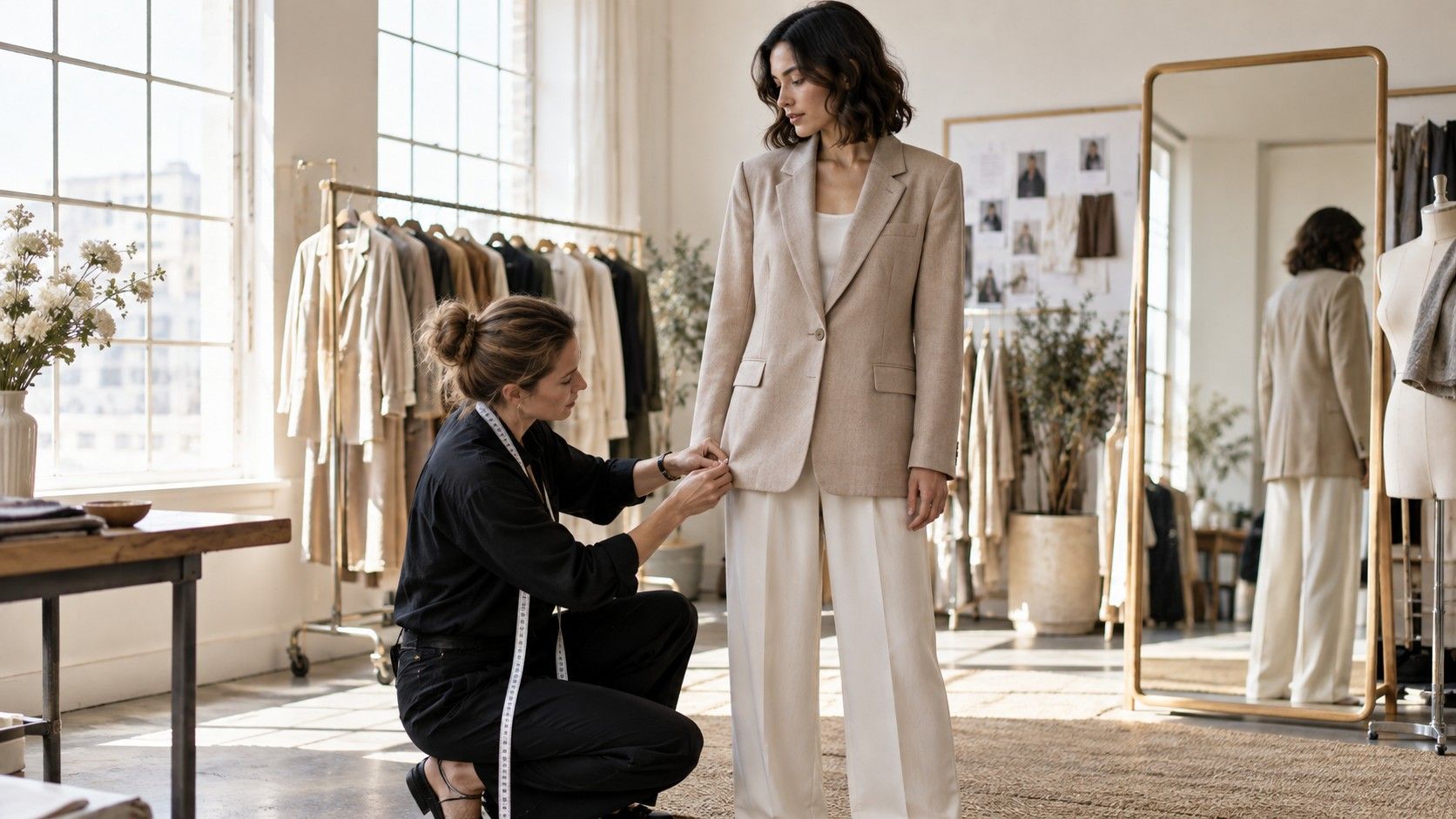
Simple tailoring is particularly useful where the waist is much smaller than the hip or bust. Taking in a center-back seam, shortening straps so the bust point is correctly placed, or moving a button can turn an almost-right piece into a regular favourite. Alterations cannot fix a too-tight shoulder or insufficient bust depth, so buy for the largest necessary area first. Then decide whether the garment is worth refining.
Keep personal taste in charge of the final choice
Advice for hourglass body measurements often treats balance as a duty. It is not. Someone may enjoy a fitted waist one day and a boxy sweatshirt the next. Clothing can emphasize a curve, skim it, or ignore it entirely. Comfort, climate, work, sensory preference, and the amount of care a garment requires are all valid reasons to choose one option over another.
A small fit notebook can make shopping calmer. Note the rise that stays comfortable, the waist seam that tends to land well, and whether you prefer woven structure or knit stretch. Those observations are more durable than a generic list of flattering items. The best outfit is the one that still feels like yours after you have sat, walked, eaten, and forgotten about the fit.