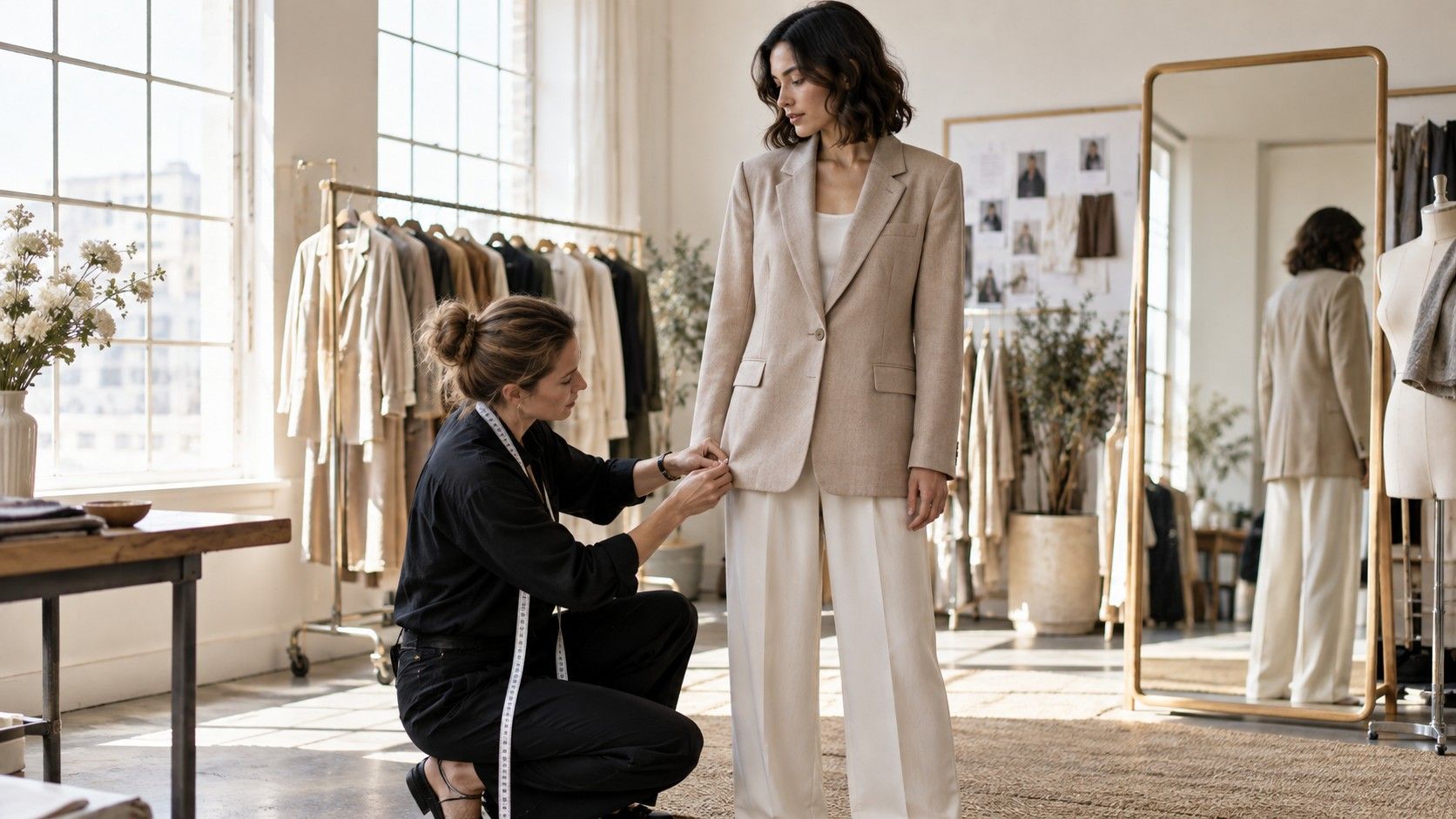
A body shape wardrobe works best when it is a record of what helps you get dressed, not a uniform built around a label. Your proportions can explain why one waistband, shoulder line, or trouser cut feels easier than another. They cannot decide your job, climate, budget, color preferences, or need to walk three miles on a Tuesday. Start with those real conditions and use fit as a useful filter.
Use body shape as one input, not the whole picture
Body-shape language can help you notice patterns: perhaps jackets pull across your shoulders, trousers fit the hips but gap at the waist, or a very low waistline makes you feel unfinished. Treat those observations as clues about construction. They are more valuable than a rule such as “people with this shape should never wear that.” A garment can be comfortable, expressive, and slightly unconventional at the same time.
Identify clothes you already repeat
Write down your practical constraints before shopping. Consider the temperature where you live, the amount of walking in a normal week, dress codes, laundry habits, and whether you need clothes to work across several settings. Someone who commutes by bike needs different fabrics from someone who drives to an office, even if both like the same tailored silhouette. Personal style becomes easier when the wardrobe matches the friction of daily life.
Create flexible outfit formulas
Open the wardrobe and look for repeat outfits rather than aspirational purchases. The shirt you wear every week, the trousers that survive a long lunch, and the jacket you grab without checking the weather are data. Note why they work: collar depth, sleeve length, fabric weight, waistband position, pocket placement, shoe height, or simply that they do not need adjusting.
Make a short fit note for each success. Instead of writing “good for my body shape,” write “mid-rise waistband stays level when seated,” “shoulder seam does not restrict reaching,” or “ankle length works with flat shoes.” These notes are specific enough to use in a changing room. They also prevent the familiar mistake of buying five versions of an item that looks right on a hanger but never leaves the closet.
An outfit formula is a repeatable combination, not a dress code. It might be straight-leg trousers, a close-fitting knit, and an unstructured jacket; wide-leg jeans, a tucked tee, and a short cardigan; or a midi dress with a layer you can remove. The formula gives you a starting point on a busy morning while leaving room for color, texture, and mood.
Build formulas around balance you enjoy rather than balance someone prescribed. A fuller trouser can pair well with a compact top, but it can also work with an oversized shirt left open over a tank. A defined waist can be a favorite feature, or it can be skipped entirely. Photograph a few successful combinations in ordinary daylight. A quick album is more useful than trying to remember how an outfit felt at the end of a rushed morning.
| Wardrobe need | Useful starting piece | Fit note to keep |
|---|---|---|
| Everyday trousers | A rise and leg shape you can sit and walk in | Waist stability, hip ease, inseam with usual shoes |
| Layering piece | Cardigan, overshirt, or jacket with room at the armhole | Shoulder seam and sleeve mobility |
| One-step outfit | Dress or jumpsuit suited to your routine | Bodice ease, waist placement, and bathroom practicality |
| Occasion option | A piece that works with shoes you can tolerate | Movement, hem length, and alteration potential |
Shop with fit notes instead of rules
Use a shopping filter that starts with fabric and cut, then price and color. If you know rigid high-rise denim presses into your ribs, do not buy it because it is labeled a wardrobe essential. If a wrap dress works only when pinned in three places, it may not be an easy option for your life. Dress for your body shape can mean choosing a pattern that accommodates your actual measurements, not choosing the silhouette most often recommended online.
Bring or wear the basics that affect fit: the bra you usually use, close-fitting underwear, and shoes similar to those you plan to wear. Check the garment from the side and back, take a few steps, and read the care label. A beautiful wool blend that requires dry cleaning may be a poor replacement for a cotton layer you wear constantly. Price per wear depends as much on care and comfort as on how classic an item looks.
Keep a tailoring list and review as life changes
A tailoring list separates near-misses from useful purchases. Hemming trousers, shortening straps, taking in a back waist, or moving a button are often simple changes when the shoulders, hips, and fabric are otherwise right. Keep a note of reliable alteration types and the approximate cost in your area. It makes a slightly imperfect find easier to evaluate calmly.
Review the wardrobe every season or after a real change in routine, not as a punishment for owning too much. Weight changes, a new job, an injury, a different climate, or shifting taste can change what fits and what you need. Keep the pieces that still work, repair the ones worth repairing, and let the body shape style guide remain a tool rather than a rulebook. The goal is a smaller set of decisions each morning, not a smaller version of yourself.
It helps to keep a short not-again note too. Perhaps clingy jersey twists after washing, oversized sleeves catch on your desk chair, or certain necklines make you adjust a bra strap all day. That list narrows future searches with useful evidence. Over time, the wardrobe becomes easier to maintain because each purchase has a clear role, a known partner, and a reason to stay.
When you want something new, test it against three ordinary questions: can it be worn this month, can it join at least two existing outfits, and can you care for it without a special project? A yes to all three is often more valuable than another supposedly essential item. Style grows through repetition and attention, not through getting every category exactly right.