If you are wondering what your body shape is, a home check works best when it feels more like trying on clothes than sitting an exam. A mirror, a measuring tape, and a few quiet notes can show recurring fit patterns. The goal is useful information, not a label that has to be defended.
Start with observation before numbers
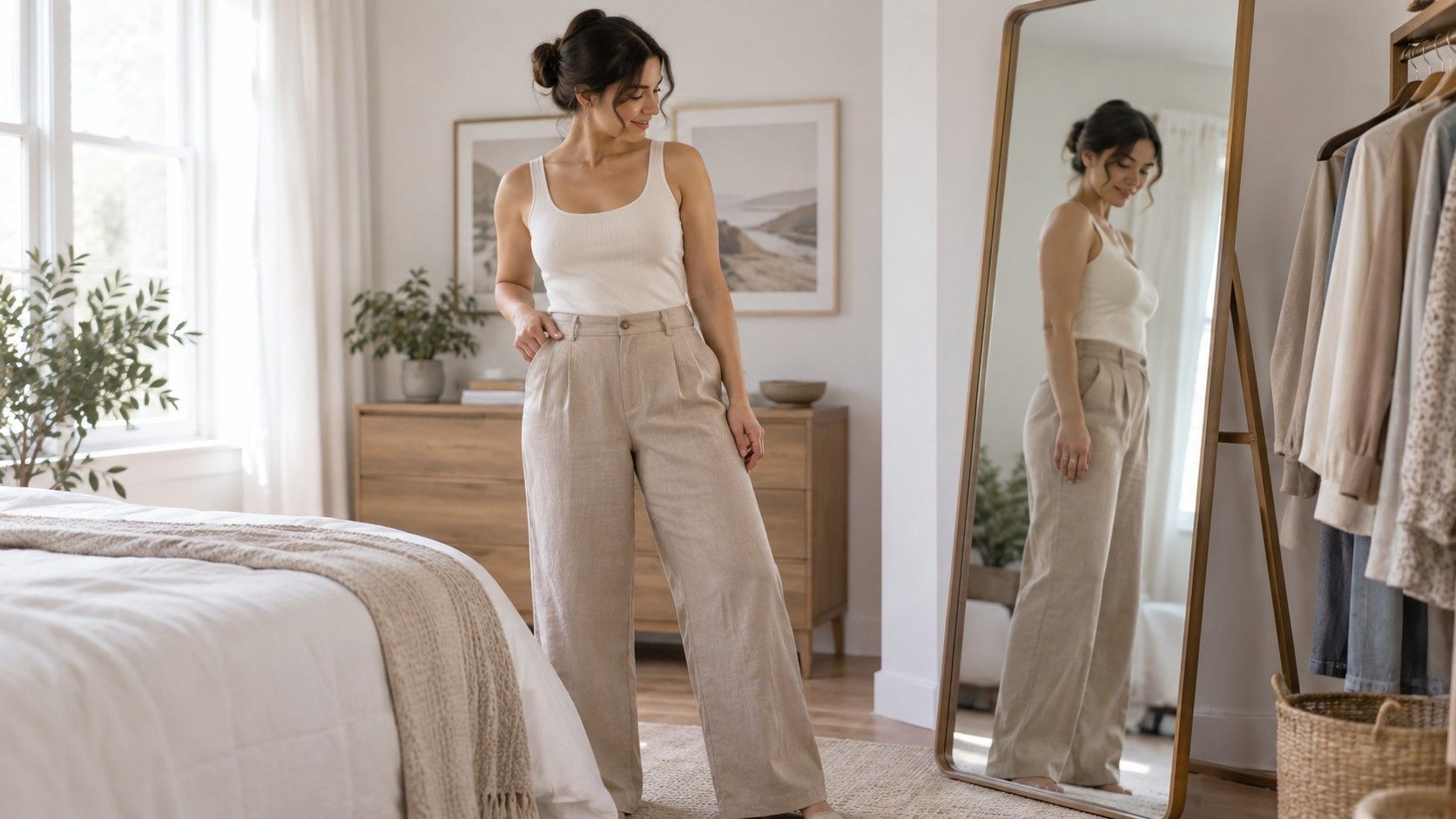
Begin in front of a full-length mirror wearing something close to the body but comfortable: leggings and a fitted T-shirt are enough. Stand with your arms relaxed and your weight shared between both feet. A dramatic pose changes the waist and shoulder line, so it is poor evidence for a body shape test.
Set up a home check that does not distort the picture
Look first at the broad outline. Do your shoulders and hips appear close in width? Does the waist make a noticeable inward line? Does the eye travel down a relatively straight column? There is no need to decide a category yet. Describe what you see in plain language before reaching for familiar labels.
Use measurements as a second signal
A front view is only one angle. Turn to the side and notice where a jacket tends to catch, where a dress skims, and whether your posture changes the impression. The side view often explains why a garment that looks balanced on a hanger feels wrong after an hour.
Use daylight or even room light rather than a mirror lit from overhead. Strong top lighting can create shadows at the waist and hips that look like definition or volume. Put the mirror on a level floor, step back far enough to see your full body, and avoid looking down at your phone while taking a photograph.
A timer photo is useful because you cannot quietly adjust your posture while studying the screen. Take one front view and one side view, then leave them alone for five minutes. Returning with fresh eyes is surprisingly effective; immediate scrutiny tends to invent problems that are not visible in real life.
Keep the exercise private if that feels better. A body type test does not need an audience, new shapewear, or a special outfit. Ordinary clothes that you know well will give more relevant clues than an image designed for social media.
| Check | What to notice | What not to conclude |
|---|---|---|
| Front mirror view | Relationship between shoulder, waist, and hip lines | A single pose defines your permanent shape |
| Side view | How bust, seat, posture, and fabric affect the profile | Flatness or curve is a quality judgement |
| Known garment | Where it pulls, gaps, or hangs cleanly | One bad cut means your body is difficult |
| Simple photo | Overall silhouette at a normal distance | A camera lens gives an objective verdict |
Compare shoulder, waist, and hip lines
For the front view, mentally draw three horizontal lines: one at the outer shoulders, one at the natural waist, and one at the fullest hips. Notice which lines look broadly similar and which one creates the strongest contrast. This is more useful than tracing every contour in the mirror.
Shoulders can look wider because of muscle, a square shoulder point, or the sleeve seam of the top you are wearing. Hips can look wider because of the pelvis, the seat, or a waistband that is sitting low. Make a note of the clothing and repeat the check in another simple top if you are unsure.
Then ask a practical question: where do you usually size up? A person who buys jackets for shoulder room and trousers for hip room may have different fitting needs from someone with the same visual silhouette. Clothing fit turns a vague observation into something actionable.
After the mirror check, measure shoulders, bust, natural waist, and fullest hips with a soft tape. Keep it parallel to the floor around bust and hips, and do not pinch the waist. Take each measurement twice; a repeat within about 1 cm or half an inch is usually enough for this purpose.
Compare the broad gaps rather than feeding tiny differences into a formula. A waist that is clearly smaller than both upper and lower measurements will matter more than whether one hip measurement exceeds the other by a fraction. This is why a body shape test can be calmer than a quiz with rigid answers.
Numbers and the mirror may disagree slightly, especially if you have a fuller bust, a strong back, or a posture that changes through the day. Keep both pieces of evidence. Neither needs to overrule the other.
When your result looks mixed
A mixed shape is common. You may see balanced shoulders and hips, a softly defined waist, and a bust that changes the fit of dresses. Or you may prefer the ease of straight shapes even though a calculator calls your waist defined. Labels are descriptions of a moment, not instructions for building a personality.
Write three comparison notes instead of choosing a winner: “waistbands sit best just above navel,” “sleeves need room across upper arm,” or “wide-leg trousers balance my preferred jacket.” Those notes will survive changes in trends, weight, strength training, and brand sizing.
Use the result to test clothes with more intention. Keep silhouettes you enjoy, borrow one new shape at a time, and judge it after sitting, walking, and seeing it in ordinary light. The most convincing answer to “what is my body shape?” is often a wardrobe that has stopped arguing with you.
For a more grounded test, choose three garments you already reach for: perhaps a jacket, jeans, and a dress. Note why each works. It may be sleeve room, a stable waistband, a neckline, or fabric that does not need adjustment. These clues are more reliable than identifying a silhouette from one snapshot.
Repeat the home check only when you need it. Constant measuring can turn a useful fitting exercise into noise. A calm reference photo and honest fit notes are enough when a new cut or unfamiliar brand asks for a decision.
If you are between categories, keep both descriptions in your notes. The clothes will quickly show which observation is relevant for each item.
Use these observations as a practical fitting note when comparing a size chart, not as a restriction. Check the garment in motion, allow for fabric and ease, and retain the option that feels comfortable through a normal day. A careful repeat of this check makes shopping calmer and gives you useful evidence for the next item as well.
Keep the number or label only when it helps you make a specific choice. Personal preferences, posture, and construction remain part of the result, so there is always room to choose the cut that feels most like you.