Body-shape categories can be a handy way to describe proportions, but they become unhelpful when they turn into a list of clothes someone is supposedly allowed to wear. A chart cannot know where you need ease, what colors make you happy, how much you walk, or whether you want to emphasize or ignore a particular line. The useful part of style guidance is noticing fit; the rest deserves a little skepticism.
Why body-shape rules became popular
Fashion advice has always looked for quick ways to make shopping less overwhelming. Labels such as pear, apple, rectangle, hourglass, and inverted triangle offer an easy visual language for shoulders, waist, and hips. Magazine pages and store guides then attached simple recommendations to each category because simple recommendations are memorable. “Create a waist” or “balance the shoulders” sounds decisive, even when it skips the person wearing the clothes.
Where categories can still be useful
Marketing advice also benefits from a problem-and-solution story. If a reader is told that a normal body feature needs correcting, a particular cut can be sold as the cure. That framing is one of the most persistent body type misconceptions. Clothing is made from patterns with measurements, ease, seams, and fabric behavior. A better question than “how do I hide this?” is “what is this garment doing when I sit, walk, and look at myself?”
The limits of “flattering” advice
A category can be a starting point for observations. If you tend to need more room at the shoulder than the waist, you may look for jackets with a comfortable armhole and consider tailoring the waist. If trousers often fit your hips but gap at the back, you might try a contoured waistband or a brand with a different waist-to-hip ratio. Those are practical fitting clues, not instructions to create a particular outline.
Categories overlap more than diagrams suggest. One person may have broad shoulders, a defined waist, fuller hips, a long torso, and shorter legs. Another may have similar circumferences but need different bra support or prefer loose clothing. Weight changes, hormones, aging, injuries, and ordinary variation change how garments sit. Treat a label as a note in a fitting notebook, not as an identity that must stay fixed.
“Flattering” often means “makes the body look closer to a narrow beauty ideal.” That is not the same as looking good, feeling powerful, or enjoying an outfit. A short skirt can show legs you want to show; a boxy jacket can give you a shape you like; a high neckline can feel calm and elegant even if an old rule says it is not optimal. Personal preference is not a mistake in the styling process.
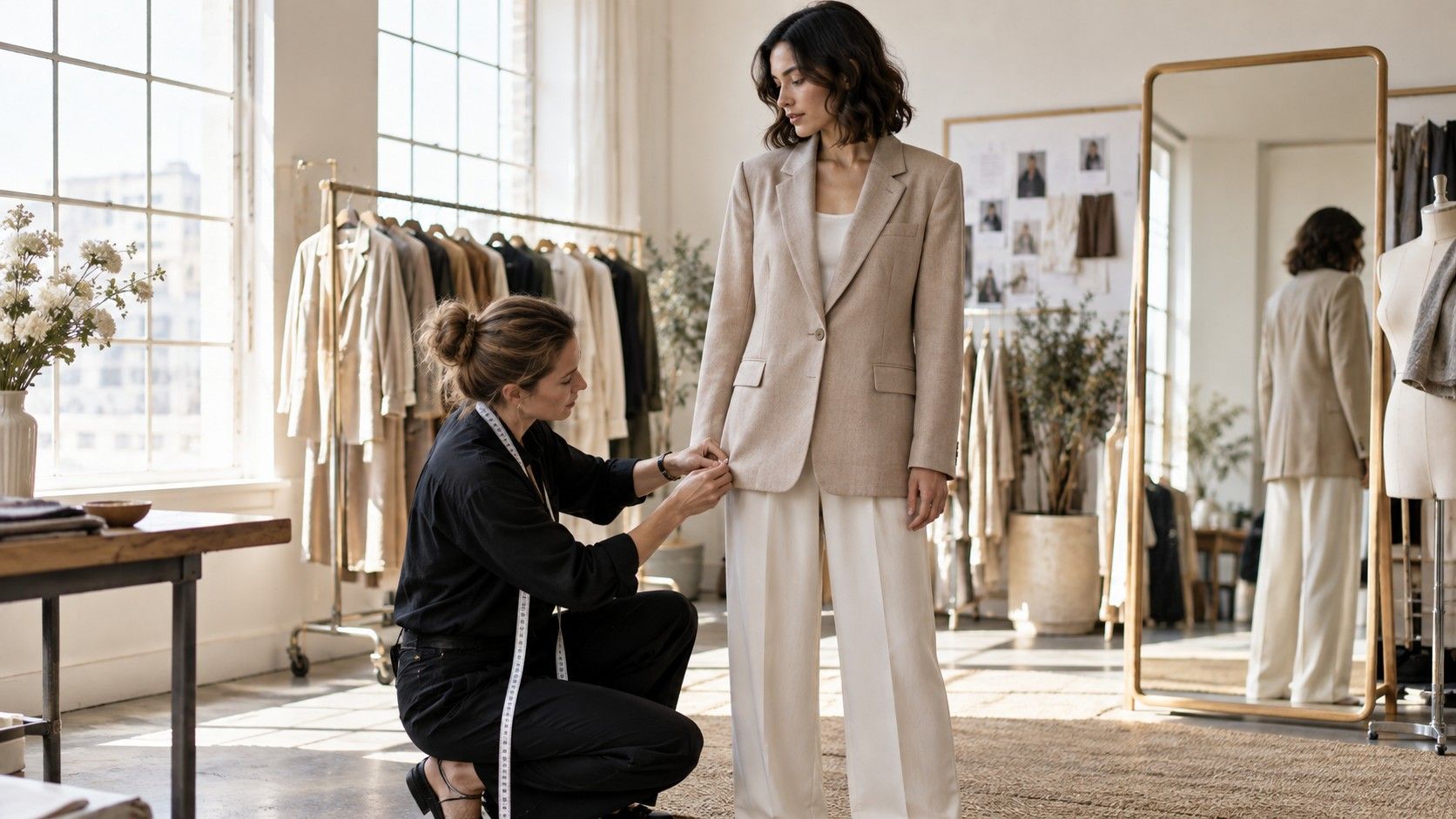
Fit remains important, but fit is not the same as visual correction. A shoulder seam that falls too far down can restrict movement. A waistband that rolls can be uncomfortable. A dress with too little bodice ease can pull at the buttons. These are construction issues with useful fixes. By contrast, advice that says a person must always lengthen, narrow, soften, balance, or disguise a part of their body is a style rule you can release.
| Common rule | What it misses | A more useful question |
|---|---|---|
| “Always define the waist” | Comfort, torso length, and preference for a loose line | Where does this seam or belt feel good today? |
| “Never wear volume top and bottom” | Fabric weight, styling, and the joy of an oversized silhouette | Can I move easily and do I like the overall shape? |
| “Dress to look thinner” | Body image and the fact that clothes are not a correction project | Does this make me feel like myself? |
| “One category means one uniform” | Category overlap and individual measurements | What specific fit feature is working or failing? |
How bodies and wardrobes change
Even a well-loved wardrobe needs revision. A new commute can make a tight pencil skirt impractical. A change in climate can make your favorite synthetic knit unbearable. Pregnancy, recovery from injury, medication, aging, and weight changes may alter where waistbands sit or how much support feels comfortable. None of this means you have chosen the wrong body shape; it means bodies are living things and wardrobes are tools.
Keep a few notes about garments that work across changes. You may find that adjustable straps, soft waistbands, stretch woven fabrics, roomy armholes, or an alteration-friendly seam give you more flexibility than a supposedly perfect cut. Also note what no longer serves you without assigning blame. A piece can be beautiful and still be wrong for your current life.
Use style guidance as a small experiment
Instead of following body shape style rules, choose one garment variable to test at a time. Try the same trousers in two rises. Compare an A-line skirt with a straighter one in similar fabric. Wear a cropped jacket and a longer jacket with the same dress. Taking simple photos in daylight can help, but the final measure is how often you reach for the item and whether you feel comfortable moving through your day.
When an outfit feels off, describe the detail rather than criticizing your body: the neckline may be too high for the necklace you want to wear, the fabric may be stiff at the hip, or the hem may fight with your shoes. This language turns disappointment into a useful shopping filter. It also makes room for experiments that are deliberately dramatic, soft, minimal, colorful, or impractical for one special night.
A more practical way to use style guidance
Build a personal reference list from real experience. Include preferred rises, sleeve lengths, bra or strap needs, fabrics that feel good, colors you return to, and outfits that work for your usual occasions. Add tailoring options: a hem, a shortened strap, or a small waist adjustment can transform something that is otherwise right. This is more precise than any universal chart.
The most helpful guidance leaves your choices wider, not narrower. Use body shape categories when they help explain a fit issue, ignore them when they create anxiety, and let comfort and curiosity have equal weight. Clothes can frame the body without judging it. That is a style rule worth keeping.